
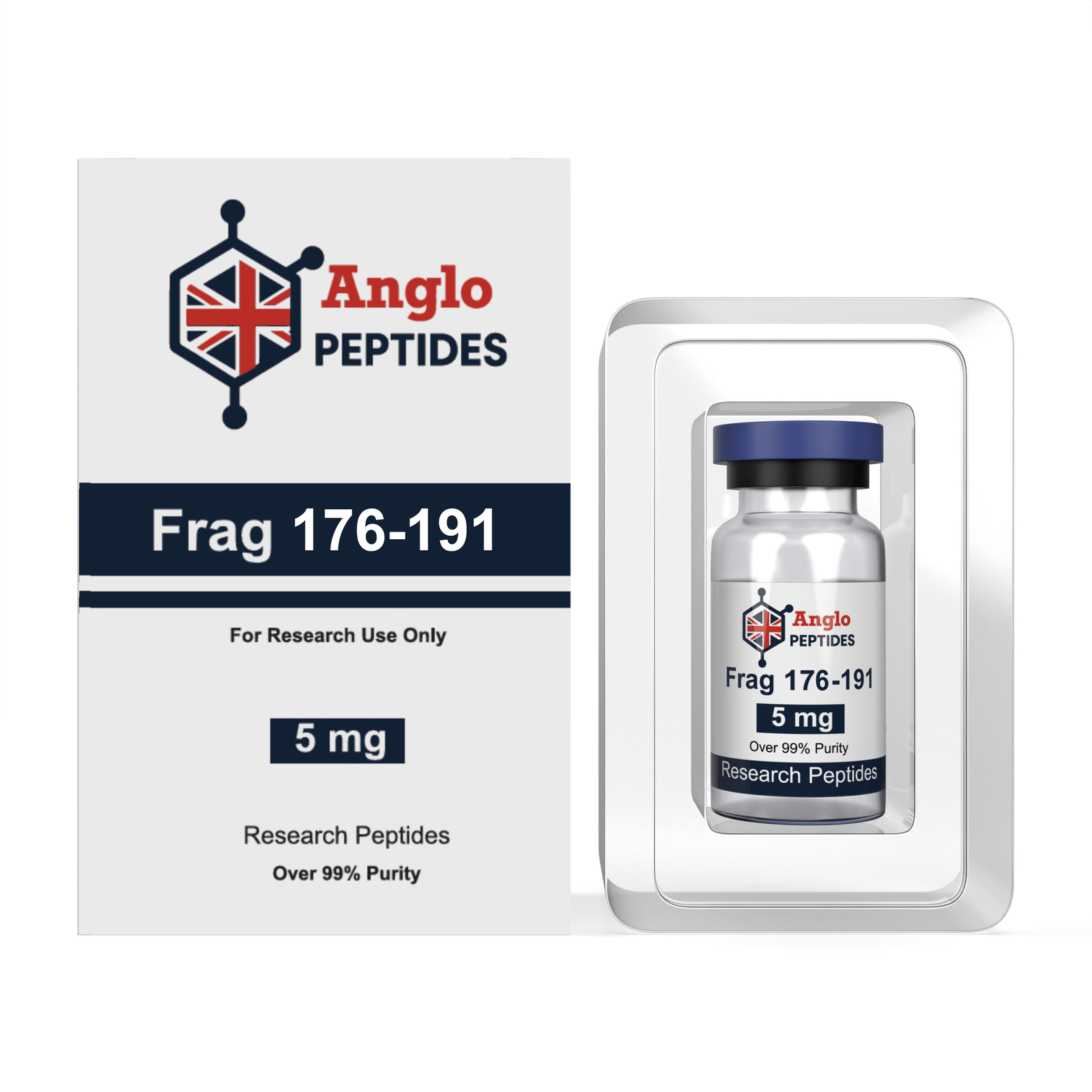
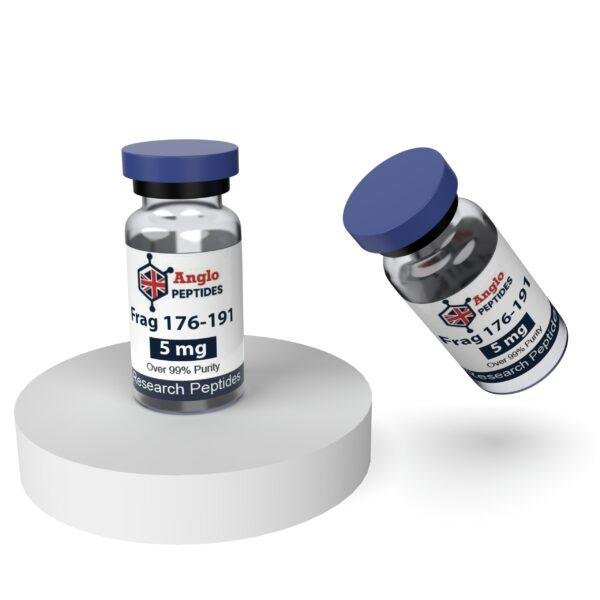
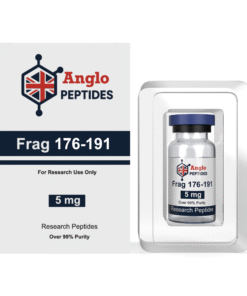
Frag 176 191 UK – Research Peptide
Anglo Peptides provides
Frag 176 191 within its research-focused catalogue for
legitimate laboratory and scientific research. Also referred to as
hGH 176-191, this peptide corresponds to the C-terminal portion of human
growth hormone and has been investigated in experimental research relating
to growth-hormone biology and metabolic processes.
The 176-191 region of human growth hormone has attracted scientific
interest because research suggests that some biological activities
associated with the C-terminal region can be studied independently from
the complete growth hormone molecule.
This page provides scientific and product information only. It does not
provide human dosing instructions, administration protocols, weight-loss
advice, treatment recommendations or guidance for personal use.
What Is Frag 176 191?
Frag 176-191 refers to a peptide sequence corresponding
to amino acids 176 through 191 of human growth hormone. It is therefore
associated with the C-terminal region of the larger growth hormone
molecule.
Research into this region has focused on whether biological effects
attributed to growth hormone can be investigated separately from the
hormone’s complete structure.
It is important to distinguish hGH 176-191 from AOD-9604. AOD-9604 is a
modified peptide based on the C-terminal fragment of human growth hormone,
with an additional tyrosine residue at the N-terminus.
Researchers can review the
PubMed research describing AOD-9604 and its relationship to hGH
177-191
for additional molecular and analytical context.
Frag 176 191 Research Background
Research involving the C-terminal region of growth hormone has examined
whether fragments can reproduce selected biological activities of the
complete hormone.
Early experimental work investigated fragments of growth hormone in
relation to lipid metabolism and other metabolic pathways. This research
contributed to the development of synthetic growth-hormone fragments
intended for laboratory investigation.
The research history surrounding these peptides is primarily
preclinical. Results obtained in animal or laboratory models should
therefore not be interpreted as establishing a human therapeutic effect.
hGH 176-191 and Growth Hormone Research
hGH 176-191 represents a small section of the human
growth hormone sequence rather than the complete hormone.
This distinction is important because full-length growth hormone has
multiple biological functions, whereas research into individual fragments
seeks to determine whether particular regions of the molecule have
distinct biological properties.
Researchers investigating hGH fragments can therefore study peptide
structure, receptor-independent mechanisms and metabolic signalling
without treating the fragment as equivalent to recombinant human growth
hormone.
176-191 Peptide and Metabolic Research
The 176-191 peptide has historically been associated with
research into the metabolic effects of the C-terminal region of growth
hormone.
Experimental research has investigated growth-hormone fragments in
relation to lipid metabolism and related biochemical pathways. These
findings have contributed to continued interest in short peptide
fragments derived from larger peptide hormones.
However, research findings vary according to the exact peptide sequence,
experimental model and methodology. It is therefore important to avoid
treating all 176-191-related products as chemically or biologically
identical.
Frag 176-191 vs AOD-9604
Although these terms are sometimes used interchangeably online,
Frag 176-191 and AOD-9604 should be distinguished.
- hGH 176-191: corresponds to the C-terminal region of
human growth hormone. - AOD-9604: is a modified growth-hormone fragment derived
from the C-terminal region and contains an additional N-terminal
tyrosine.
Analytical research has specifically identified AOD-9604 as a modified
peptide rather than simply an identical synonym for the unmodified
growth-hormone fragment. :contentReference[oaicite:1]{index=1}
Researchers should therefore verify the exact amino-acid sequence and
product specifications when comparing different research materials.
Frag 176 191 UK Product Information
Researchers considering Frag 176-191 UK should review
the specific product information provided on this page before ordering.
Relevant product considerations may include product presentation,
available quantity, sequence information, storage requirements where
provided and applicable fulfilment arrangements.
Researchers should verify the exact specifications of the material being
evaluated and ensure that it is appropriate for their validated
laboratory procedures.
For delivery information, review the
Anglo Peptides Shipping Policy
.
Current Research Landscape
Interest in growth-hormone-derived peptides continues within experimental
endocrinology and metabolic research. However, the evidence base differs
significantly between individual compounds.
A 2026 review of peptides affecting the GH-IGF-1 axis identifies hGH
176-191/AOD9604 among growth-hormone-related research compounds and
highlights the limited regulatory evidence and uncertainty surrounding
unregulated peptide products. :contentReference[oaicite:2]{index=2}
The same review distinguishes experimental peptide research from
established clinical indications and emphasises the need to interpret
claims about metabolic or performance effects cautiously. :contentReference[oaicite:3]{index=3}
Frag 176 191 Research Areas
Scientific investigation involving growth-hormone fragments has included:
- Growth hormone molecular biology
- Peptide structure and sequence research
- Lipid metabolism
- Metabolic signalling
- Growth hormone fragment pharmacology
- Peptide analytical chemistry
These areas describe research interests rather than approved therapeutic
indications for Frag 176-191.
Frag 176 191 and Related Research Products
Researchers investigating growth-hormone-derived peptides can also explore
related materials available through the Anglo Peptides catalogue.
AOD-9604 peptide
– a modified growth-hormone fragment related to the 176-191 research
area.
Ipamorelin
– a separate research peptide investigated as a growth hormone
secretagogue.
CJC-1295 + Ipamorelin
– a related research formulation involving growth-hormone signalling.
MOTS-c peptide
– a mitochondrial-derived peptide investigated in metabolic research.
Explore the complete
research peptide collection
for additional research materials.
Understanding Frag 176-191 Research
Researchers should distinguish between the sequence identity of a peptide
and claims made about its biological effects. A peptide derived from a
particular region of growth hormone does not necessarily reproduce all
functions of the full-length hormone.
The exact sequence, purity, formulation and experimental conditions can
influence research findings. Researchers should therefore consult primary
literature and product documentation when evaluating experimental results.
Research and Safety Considerations
Frag 176-191 is presented as an experimental research peptide rather than
an established medicine. Human safety and therapeutic effectiveness should
not be inferred from preclinical research.
Recent scientific literature also highlights uncertainty surrounding
unregulated growth-hormone-axis peptides, including uncertainty about
product composition, dosing and potential endocrine or metabolic effects.
:contentReference[oaicite:4]{index=4}
Researchers should follow appropriate laboratory handling procedures and
institutional safety requirements when working with experimental peptide
materials.
Ordering Frag 176 191 UK
Before ordering, researchers should review the available product
information and confirm that the intended purchase is appropriate for
legitimate laboratory or scientific research.
Customers and researchers are responsible for ensuring that their
purchase, possession, handling and intended research activities comply
with applicable laws, regulations and institutional requirements.
To explore the wider catalogue, visit the
Anglo Peptides Shop
.
Research-Use Notice
Frag 176-191 products supplied through Anglo Peptides are presented
strictly for legitimate research purposes.
This product is not intended for human consumption, self-administration,
diagnosis, treatment or prevention of disease.
Anglo Peptides does not provide dosing instructions, administration
protocols, weight-loss regimens, treatment recommendations or medical
advice. Researchers are responsible for ensuring that their activities
comply with applicable legal, regulatory and institutional requirements.
Frequently Asked Questions
What is Frag 176 191?
Frag 176-191 refers to a peptide sequence corresponding to the
C-terminal region of human growth hormone. It has been investigated in
experimental research involving growth-hormone-derived peptides and
metabolic processes.
Is Frag 176-191 the same as AOD-9604?
No. AOD-9604 is a modified peptide derived from the C-terminal region of
human growth hormone and contains an additional N-terminal tyrosine.
Researchers should verify the exact sequence of the material being
studied.
What is hGH 176-191 researched for?
Research has investigated growth-hormone fragments in areas including
peptide biology, lipid metabolism, metabolic signalling and growth
hormone pharmacology.
Is Frag 176-191 an approved medicine?
Frag 176-191 should not be represented as an approved medicine or
established treatment. The evidence surrounding growth-hormone-derived
research peptides remains primarily experimental.
Is this product intended for human use?
No. Products supplied through Anglo Peptides are presented strictly for
legitimate research purposes and are not intended for human consumption
or self-administration.
Where can I find related research peptides?
Explore the
AOD-9604 peptide
product page or browse the complete
research peptide collection
.
Explore Frag 176 191 UK
Review the available Frag 176-191 product information and explore related
research materials within the Anglo Peptides catalogue.

Reviews
There are no reviews yet.