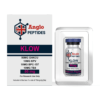
KLOW Peptide UK – Research Peptide Blend
Anglo Peptides provides
KLOW Peptide UK within its research-focused catalogue for
legitimate laboratory and scientific research. KLOW is generally
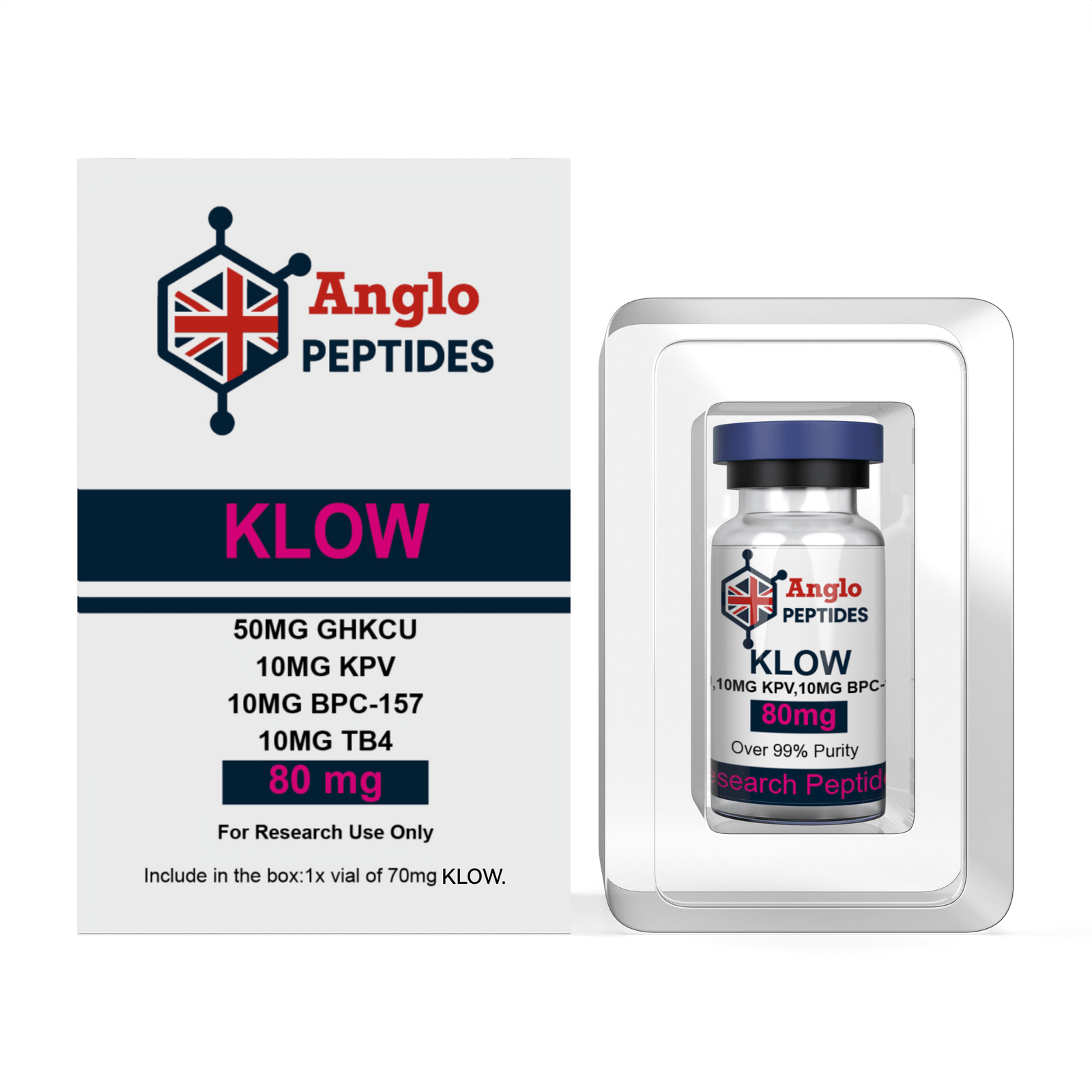
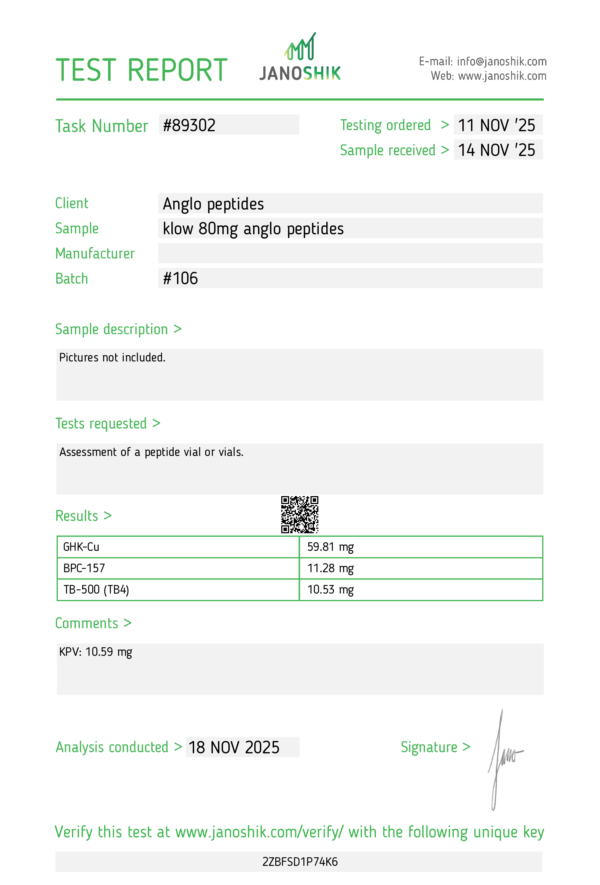
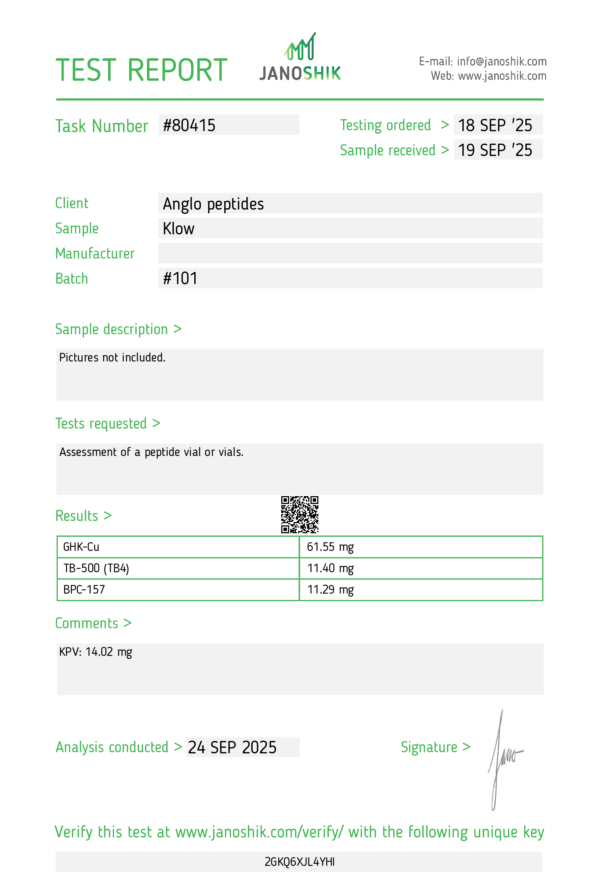
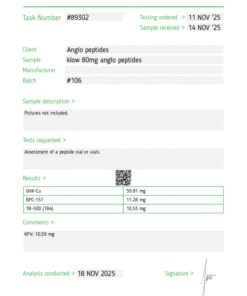
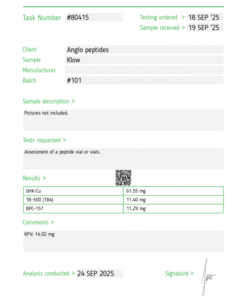
described as a multi-peptide research blend containing KPV, GHK-Cu,
BPC-157 and TB-500-related material.
Unlike a single defined peptide molecule, KLOW is a combination of
separate peptide compounds. This distinction is important when evaluating
its scientific literature because most published evidence concerns the
individual components rather than the KLOW combination itself.
This page provides product and scientific information only. It does not
provide dosing instructions, injection protocols, treatment
recommendations or guidance for personal administration.
What Is KLOW Peptide?
KLOW peptide is a term used for a multi-peptide
formulation rather than one single molecular entity. Sources describing
the blend commonly identify four component peptides: KPV, GHK-Cu,
BPC-157 and TB-500.
Each component has its own chemical identity and research history. KPV is
an alpha-MSH-derived tripeptide, GHK-Cu is a copper-associated peptide,
BPC-157 is a short peptide investigated primarily in preclinical models,
and TB-500 is associated with a fragment of thymosin beta-4.
Because these compounds are structurally different, research findings
involving one component should not automatically be attributed to the
complete KLOW blend.
For an independent overview of the composition and research status of the
blend, researchers can review this
independent KLOW peptide research overview
.
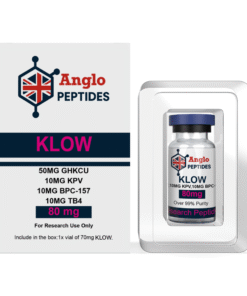
KLOW Peptide Blend Composition
The commonly described KLOW formulation combines four distinct research
peptides:
- KPV – an α-MSH-derived tripeptide investigated in
inflammatory and epithelial research. - GHK-Cu – a copper-associated peptide investigated in
skin, extracellular-matrix and biochemical research. - BPC-157 – a short peptide investigated extensively in
preclinical research involving tissue and gastrointestinal models. - TB-500 – a synthetic peptide fragment associated with
thymosin beta-4 research.
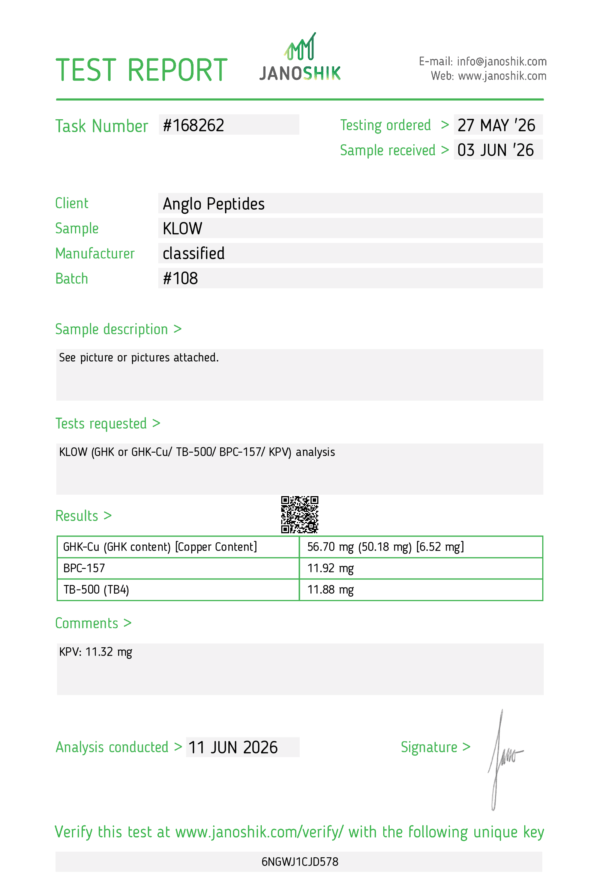
Exact composition and quantities can vary between products marketed under
the KLOW name. Researchers should therefore verify the specific product
specifications supplied with the material they are evaluating.
KLOW Research Background
Research interest in KLOW comes primarily from the scientific literature
surrounding its individual components. Studies involving KPV have examined
inflammatory signalling, while GHK-Cu has been investigated in relation to
extracellular-matrix biology and cellular processes.
BPC-157 and thymosin beta-4-related compounds have also been investigated
in various preclinical models. These separate research records provide
scientific context for why researchers may investigate multi-component
formulations.
However, evidence concerning the individual components does not establish
that the combination produces the same effects, greater effects or any
predictable interaction between the four compounds.
KLOW and Individual Peptide Research
Researchers evaluating a KLOW research peptide should
distinguish between evidence relating to the blend and evidence relating
to its individual components.
For example, published research has examined KPV in experimental
inflammatory models, while separate literature exists for GHK-Cu,
BPC-157 and thymosin beta-4-related compounds.
These studies can provide useful background for laboratory investigation,
but none should be presented as a controlled clinical evaluation of the
complete KLOW formulation.
Researchers interested specifically in KPV can review the
peer-reviewed KPV research available through PubMed
.
KLOW Peptide UK Product Information
Researchers considering a KLOW peptide blend should review
the specific product information provided on this page before ordering.
Relevant product considerations may include available quantity,
formulation, product presentation, storage information where provided and
applicable fulfilment arrangements.
Because KLOW is a combination of separate peptides, researchers should
confirm the exact composition and specifications of the particular product
being evaluated rather than relying on generic descriptions of KLOW.
For delivery and fulfilment information, review the
Anglo Peptides Shipping Policy
.
Research Areas Associated With KLOW Components
The individual components of KLOW have been investigated across several
areas of laboratory research, including:
- Peptide chemistry
- Inflammatory signalling
- Cellular biology
- Extracellular-matrix research
- Wound and tissue models
- Gastrointestinal research
- Biochemical signalling
These research areas describe the scientific literature surrounding the
individual components and should not be interpreted as established
therapeutic applications of the KLOW blend.
KLOW Peptide and Related Research Products
Researchers interested in the individual components of the KLOW formulation
can also explore related products available through the Anglo Peptides
catalogue.
KPV peptide
– the α-MSH-derived tripeptide component associated with inflammatory
signalling research.
GHK-Cu
– a copper-associated peptide investigated in biochemical and
extracellular-matrix research.
BPC-157 UK
– a separate research peptide with an extensive preclinical literature.
TB-500 peptide
– a separate research product associated with thymosin beta-4 fragment
research.
Researchers can also browse the complete
research peptide collection
for additional materials.
Understanding KLOW Research
One of the most important considerations when evaluating KLOW is the
distinction between component-level evidence and blend-level evidence.
Research involving KPV, GHK-Cu, BPC-157 or TB-500 individually does not
establish how those compounds behave when combined. The pharmacology,
stability, absorption and biological interactions of a multi-peptide
formulation require separate investigation.
Researchers should therefore assess the original studies for each
component and avoid treating claims based on individual peptide research
as proof of an effect from the combined formulation.
Research and Safety Considerations
KLOW should be considered an experimental research formulation rather than
an established medicinal product. Current information concerning the blend
does not establish a validated human safety profile or therapeutic
protocol.
Researchers should consider the properties and safety information of each
individual component, as well as the additional uncertainties associated
with combining multiple biologically active peptides.
Appropriate laboratory controls, handling procedures and institutional
research protocols should be followed when working with experimental
peptide materials.
Ordering KLOW Peptide UK
Before ordering, researchers should review the available product
information and confirm that the intended purchase is appropriate for
legitimate laboratory or scientific research.
Customers and researchers are responsible for ensuring that their
purchase, possession, handling and intended research activities comply
with applicable laws, regulations and institutional requirements.
To explore the wider catalogue, visit the
Anglo Peptides Shop
.
Research-Use Notice
KLOW products supplied through Anglo Peptides are presented strictly for
legitimate research purposes.
This product is not intended for human consumption, self-administration,
diagnosis, treatment or prevention of disease.
Anglo Peptides does not provide dosing instructions, injection protocols,
treatment recommendations or medical advice. Researchers are responsible
for ensuring that their activities comply with applicable legal,
regulatory and institutional requirements.
Frequently Asked Questions
What is KLOW peptide?
KLOW is a term used for a multi-peptide research blend commonly described
as containing KPV, GHK-Cu, BPC-157 and TB-500-related material. It is not
one single peptide molecule.
What peptides are in KLOW?
Common descriptions of KLOW identify KPV, GHK-Cu, BPC-157 and TB-500 as
its four components. Because formulations can differ, researchers should
verify the exact composition of the specific product being evaluated.
Is KLOW the same as one individual peptide?
No. KLOW is described as a combination of separate peptides. Each
component has its own molecular identity and scientific literature.
Has the complete KLOW blend been clinically tested?
Current evidence does not establish a controlled clinical trial evaluating
the complete KLOW combination. Much of the scientific rationale for the
blend comes from research involving its individual components.
Is KLOW an approved medicine?
KLOW is presented as an experimental research formulation rather than an
approved medicine. Researchers should not interpret product information
as evidence of an established therapeutic indication.
Is KLOW intended for human use?
No. Products supplied through Anglo Peptides are presented strictly for
legitimate research purposes and are not intended for human consumption
or self-administration.
Where can I find the individual KLOW components?
Explore the
KPV peptide
,
GHK-Cu
,
BPC-157
and
TB-500
product pages.
Explore KLOW Peptide UK
Review the available KLOW product information and explore related
research materials within the Anglo Peptides catalogue.

Reviews
There are no reviews yet.