
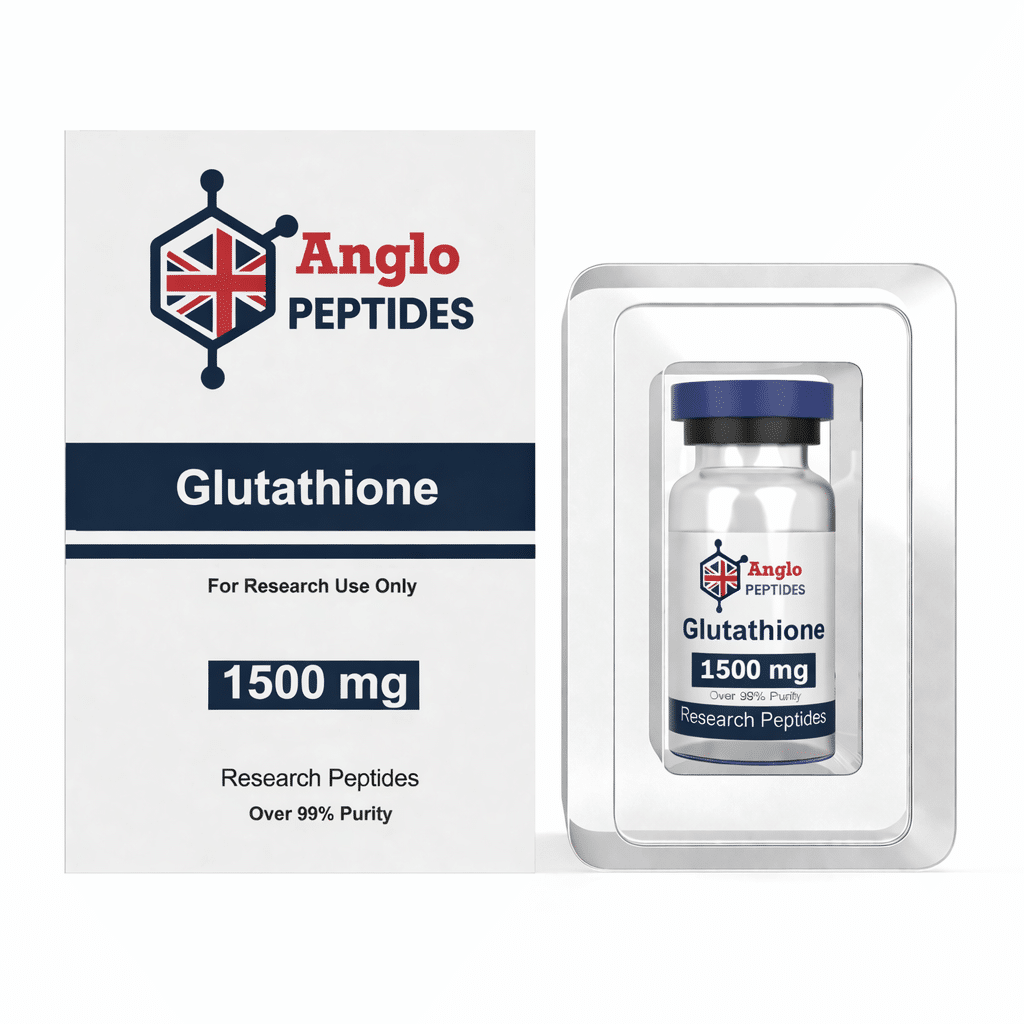
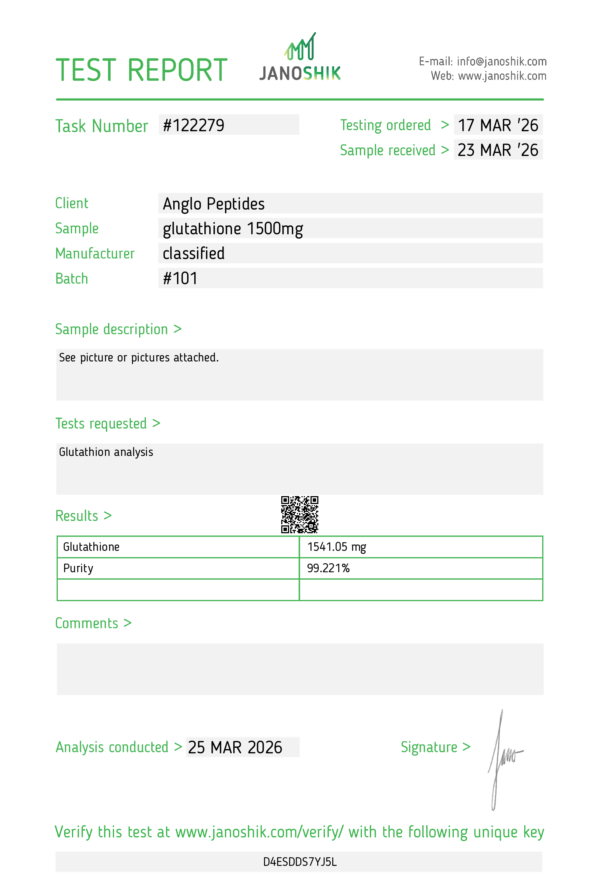
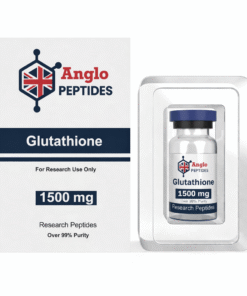
Buy Glutathione UK – Research Peptide
Researchers looking to buy glutathione can explore the
research-use product available through
Anglo Peptides.
Glutathione is a naturally occurring tripeptide composed of glutamate,
cysteine and glycine and is one of the most important low-molecular-weight
thiols found in biological systems.
Glutathione research spans cellular redox regulation, oxidative processes,
enzyme activity, mitochondrial biology and biochemical detoxification
pathways. Its ability to alternate between reduced and oxidised forms
makes it particularly important in studies of cellular redox balance.
This page provides scientific and product information for legitimate
research purposes. It does not provide treatment recommendations, dosing
instructions or guidance for personal administration.
What Is Glutathione?
Glutathione, commonly abbreviated as GSH, is a tripeptide
consisting of glutamate, cysteine and glycine. Unlike many conventional
peptides, glutathione has a distinctive gamma-glutamyl linkage that
contributes to its biochemical properties.
The compound occurs naturally in cells and participates in numerous
biochemical processes. Reduced glutathione contains a reactive sulfhydryl
group that enables it to participate in redox reactions and interactions
with electrophilic compounds.
The
NIH PubChem entry for glutathione
provides detailed information about its molecular structure, identifiers,
properties and biological classification.
Glutathione Research Background
Glutathione research has been conducted across
biochemistry, cell biology, pharmacology and molecular biology. Because
GSH is involved in maintaining intracellular redox conditions, it is an
important research subject in studies examining oxidative and
electrophilic stress.
Glutathione can exist primarily in two forms: reduced glutathione (GSH)
and oxidised glutathione disulfide (GSSG). The relationship between these
forms is an important component of cellular redox regulation.
Maintaining appropriate intracellular glutathione status is associated
with numerous enzymatic and non-enzymatic processes. Researchers therefore
frequently examine GSH and GSSG together when investigating cellular redox
biology.
Reduced Glutathione
Reduced glutathione, or GSH, is the biologically reduced
form of glutathione. Its cysteine thiol group allows it to participate in
oxidation-reduction reactions and to act as a substrate or cofactor in
several enzyme systems.
During oxidative reactions, GSH can become oxidised to glutathione
disulfide (GSSG). Cellular systems can subsequently regenerate reduced
GSH, allowing researchers to study the dynamic relationship between the
reduced and oxidised forms.
This GSH/GSSG relationship is widely used as a research marker when
examining cellular redox status and oxidative processes.
Glutathione and Redox Biology
One of the most important areas of glutathione research
involves redox biology. GSH contributes to the cellular response to
reactive oxygen species and electrophilic compounds.
Glutathione also participates in enzyme-mediated reactions involving
glutathione peroxidases, glutathione transferases and glutaredoxins.
These systems help regulate cellular redox chemistry and the handling of
reactive compounds.
A comprehensive review of glutathione biology describes GSH as a major
intracellular thiol involved in redox regulation, detoxification reactions
and multiple enzyme systems.
Researchers can review the
NIH-supported review of glutathione’s biological importance
for additional scientific background.
Glutathione and Mitochondrial Research
Glutathione is also an important subject in mitochondrial research.
Mitochondria contain their own glutathione pool, which contributes to
maintaining an appropriate redox environment within the organelle.
Researchers have investigated mitochondrial glutathione in relation to
oxidative processes, cellular signalling and mitochondrial function.
Understanding how GSH is transported, synthesised and maintained within
mitochondria provides useful insight into cellular redox regulation.
A detailed review of mitochondrial glutathione research examines the role
of GSH in mitochondrial function and cellular stress responses.
View the mitochondrial glutathione research review
.
Glutathione Peptide Structure
Although often discussed alongside peptide research, glutathione is a
specific naturally occurring tripeptide rather than a conventional
signalling peptide.
Its sequence consists of glutamate, cysteine and glycine, represented as
γ-glutamyl-cysteinyl-glycine. The unusual linkage between glutamate and
cysteine distinguishes glutathione structurally from many standard
peptide sequences.
This molecular structure is directly connected to its biochemical
function and makes glutathione an important model compound for research
into thiol chemistry and cellular redox processes.
Glutathione Research Areas
Scientific research involving glutathione covers a broad range of
biological and biochemical subjects, including:
- Redox biology
- Oxidative stress research
- Cellular metabolism
- Mitochondrial biology
- Enzyme activity
- Electrophile detoxification pathways
- Glutathione metabolism
- Cellular signalling
These areas reflect the established biochemical role of GSH and should
not be interpreted as evidence that a commercial glutathione product
provides a particular clinical benefit.
Glutathione UK Research Product Information
Researchers considering Glutathione UK should review the
specific product information provided on this page before ordering.
Relevant product considerations may include the available quantity,
product presentation, form of glutathione, storage information where
provided and applicable fulfilment arrangements.
Researchers should verify the exact specifications of the material being
evaluated and ensure that it is appropriate for their validated laboratory
procedures.
For delivery information, review the
Anglo Peptides Shipping Policy
.
Glutathione and Related Research Products
Researchers investigating cellular metabolism, redox biology and peptide
science can also explore related products available through the Anglo
Peptides catalogue.
NAD research product
– relevant to research involving cellular metabolism and redox
processes.
Methylene Blue UK
– a redox-active research compound investigated in biochemical and
mitochondrial research.
MOTS-c peptide
– a mitochondrial-derived peptide investigated in metabolic research.
GHK-Cu
– a copper-associated peptide investigated in biochemical and
extracellular-matrix research.
Explore the complete
research peptide collection
for additional research materials.
Understanding Glutathione Research
Glutathione is naturally synthesised by cells, and its concentration and
activity can vary according to tissue, cellular conditions and metabolic
state.
When interpreting published research, it is therefore important to
distinguish between studies examining endogenous glutathione biology and
studies evaluating externally supplied glutathione.
Research findings can also vary according to the form of glutathione,
experimental model, route of exposure and study design. Researchers should
consult the original methodology before drawing conclusions from a
particular study.
Glutathione Research and Safety Considerations
Glutathione is a naturally occurring biological molecule, but this does
not mean that every glutathione preparation or route of administration
has the same safety or regulatory profile.
Researchers should distinguish laboratory research material from
pharmaceutical formulations, nutritional products and clinically
administered preparations.
Appropriate laboratory handling procedures and institutional safety
requirements should be followed when working with research materials.
Ordering Glutathione UK
Before ordering, researchers should review the available product
information and confirm that the intended purchase is appropriate for
legitimate laboratory or scientific research.
Customers and researchers are responsible for ensuring that their
purchase, possession, handling and intended research activities comply
with applicable laws, regulations and institutional requirements.
To explore the wider catalogue, visit the
Anglo Peptides Shop
.
Research-Use Notice
Glutathione products supplied through Anglo Peptides are presented
strictly for legitimate research purposes.
This product is not intended for human consumption, self-administration,
diagnosis, treatment or prevention of disease.
Anglo Peptides does not provide dosing instructions, administration
protocols, treatment recommendations or medical advice. Researchers are
responsible for ensuring that their activities comply with applicable
legal, regulatory and institutional requirements.
Frequently Asked Questions
What is glutathione?
Glutathione is a naturally occurring tripeptide composed of glutamate,
cysteine and glycine. It plays important roles in cellular redox
regulation and biochemical reactions.
What is reduced glutathione?
Reduced glutathione, commonly called GSH, is the reduced form of
glutathione containing an active thiol group. It participates in numerous
cellular redox reactions.
What is glutathione researched for?
Research involving glutathione includes redox biology, oxidative
processes, mitochondrial function, enzyme activity, cellular metabolism
and detoxification pathways.
Is glutathione a peptide?
Yes. Glutathione is a tripeptide consisting of three amino acids:
glutamate, cysteine and glycine. Its unusual gamma-glutamyl linkage gives
it distinctive biochemical properties.
Is this glutathione product intended for human use?
No. Products supplied through Anglo Peptides are presented strictly for
legitimate research purposes and are not intended for human consumption
or self-administration.
Where can I find related research products?
Browse the
research peptide collection
or visit the
Anglo Peptides Shop
.
Explore Glutathione UK
Review the available glutathione product information and explore related
research materials within the Anglo Peptides catalogue.


Reviews
There are no reviews yet.