

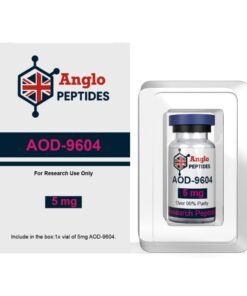


AOD 9604 Peptide UK – Research Peptide
The AOD 9604 peptide is an experimental peptide that has
attracted scientific interest primarily because of its proposed
relationship with lipid metabolism and fatty-acid biology.
Anglo Peptides presents this
material for legitimate laboratory and scientific research.
AOD-9604 was developed from a specific region of human growth hormone
rather than representing the complete growth hormone molecule. Its
research profile has therefore focused on investigating metabolic
pathways associated with lipid handling while attempting to separate
those effects from the broader biological activity of growth hormone.
This page provides scientific and product information only. It does not
provide human dosing instructions, administration protocols, weight-loss
treatment advice or instructions for personal use.
What Is AOD-9604?
AOD-9604 is a synthetic peptide derived from a region of human growth
hormone. The compound was developed as a research candidate to examine
whether some of the metabolic effects associated with growth hormone
could be investigated independently of its broader growth-promoting
activity.
The scientific rationale behind the molecule has centred on its proposed
effects on lipid metabolism, particularly processes involving fatty-acid
mobilisation and storage.
Researchers can consult the
PubChem database
for authoritative chemical and molecular reference information when
evaluating peptide research materials.
AOD-9604 Research Background
Early investigations examined the biological activity of the growth
hormone-derived fragment in laboratory and animal models. Researchers
were particularly interested in whether the peptide could influence
adipose-tissue biology without reproducing all of the effects associated
with intact growth hormone.
This research led to investigations involving lipid mobilisation,
lipogenesis and related metabolic pathways.
The distinction between preclinical observations and demonstrated human
efficacy is important. Experimental findings can identify mechanisms
worthy of further investigation but do not by themselves establish an
approved therapeutic application.
AOD-9604 and Lipid Metabolism Research
One of the main areas of interest surrounding this compound is lipid
metabolism.
Lipid metabolism involves interconnected processes controlling the
synthesis, storage, mobilisation and utilisation of fatty acids and
triglycerides. Researchers have investigated whether AOD-9604 can
influence selected pathways involved in these processes.
Preclinical studies have reported effects involving lipolytic activity
and lipid storage in experimental systems. However, findings can differ
according to the biological model, experimental conditions and study
design.
Researchers should therefore evaluate the specific endpoint measured in
each study rather than treating all reported metabolic effects as
equivalent.
AOD-9604 and Adipose-Tissue Research
Adipose tissue is another important area of investigation. Researchers
study adipocytes to understand how fat cells store and release energy
and how different signalling molecules can influence these processes.
Experimental work involving AOD-9604 has examined aspects of adipocyte
biology and lipid handling. These studies contribute to the broader
investigation of peptide-based approaches to metabolic research.
Results from cell and animal models should not be interpreted as evidence
that the same effects occur in humans. Human metabolic physiology is
substantially more complex and requires dedicated clinical investigation.
AOD-9604 and Growth Hormone Research
AOD-9604 has a particularly interesting place in peptide research because
it originates from human growth hormone but was investigated for
metabolic activity rather than as a replacement for intact growth
hormone.
Growth hormone has multiple biological functions involving growth,
metabolism and tissue regulation. AOD-9604 research has instead focused
on a narrower subset of metabolic processes.
This makes the molecule useful for researchers interested in examining
how specific peptide sequences may produce distinct biological responses.
AOD-9604 Human Research
Human research has been conducted on AOD-9604, including studies
investigating its pharmacological and metabolic characteristics.
However, human research should be interpreted separately from the larger
body of preclinical literature. Evidence of activity in laboratory or
animal models does not automatically demonstrate clinically meaningful
efficacy in people.
This distinction is especially important when evaluating commercial
claims concerning body composition or weight management.
AOD-9604 and Weight-Loss Research
AOD-9604 is frequently discussed online in connection with weight-loss
research because of its historical development around lipid metabolism.
Nevertheless, an experimental effect on lipid metabolism should not be
equated with a clinically established weight-loss treatment.
Researchers evaluating this area should distinguish between changes in
lipid-related endpoints, changes in body weight and clinically meaningful
long-term outcomes.
The scientific literature should therefore be considered before drawing
conclusions about potential applications.
Current Evidence for AOD-9604
The research profile of this peptide includes laboratory, animal and
human investigations, but evidence across these stages is not equally
established.
Preclinical studies provide useful information about molecular activity
and biological mechanisms. Human studies are necessary to establish
whether those findings translate into meaningful and reproducible
outcomes in people.
Researchers should therefore assess study design, sample size,
experimental endpoints, formulation and independent replication when
evaluating the available evidence.
For broader scientific literature, researchers can search
PubMed for AOD-9604 research
.
AOD-9604 Research Areas
Scientific investigation involving this peptide can include:
- Lipid metabolism
- Fatty-acid biology
- Adipocyte research
- Lipolysis studies
- Lipogenesis research
- Metabolic signalling
- Growth hormone-derived peptide research
- Peptide pharmacology
These categories describe areas of scientific investigation and should
not be interpreted as approved therapeutic indications.
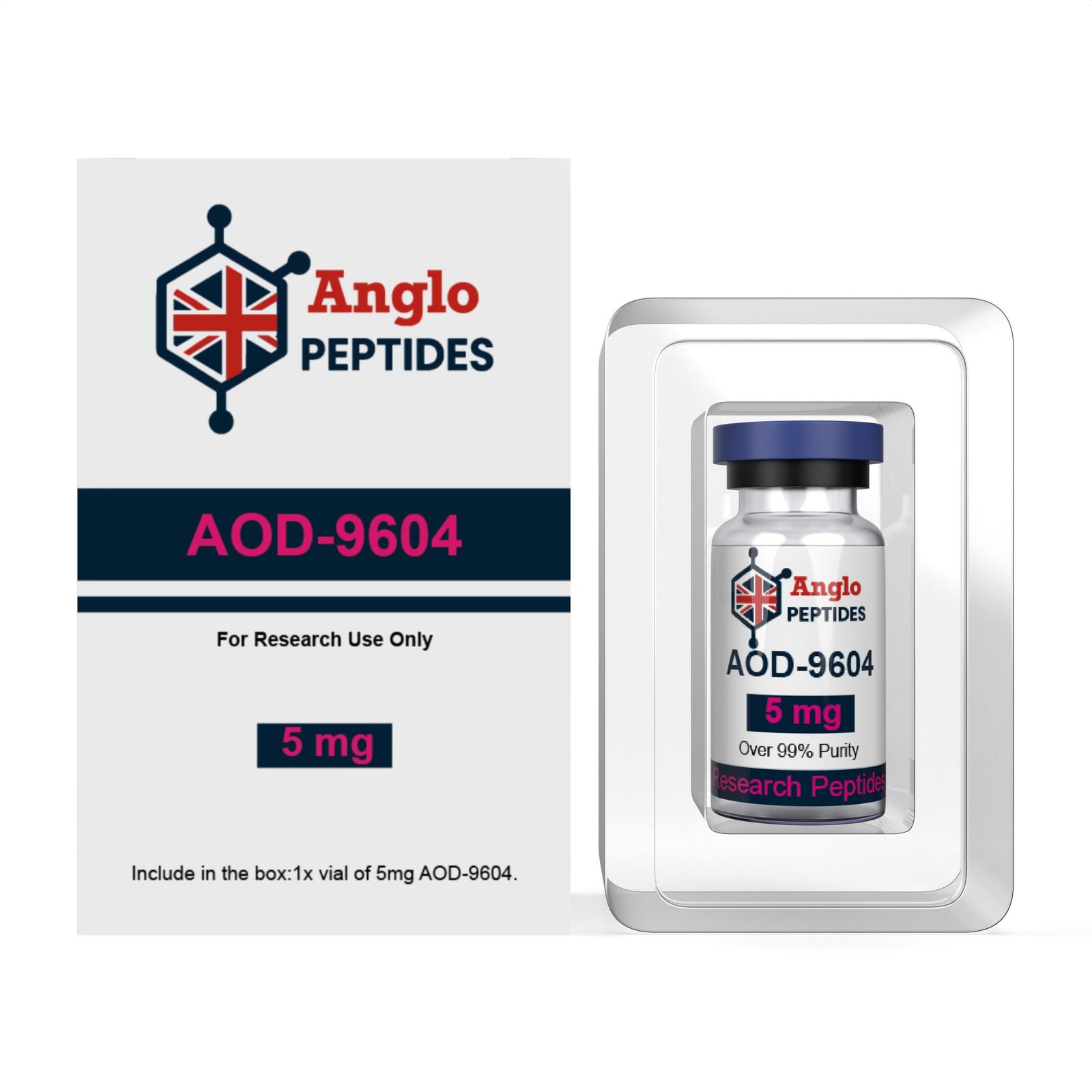
AOD-9604 UK Product Information
Researchers searching for AOD-9604 UK should review the
exact product specifications before incorporating experimental material
into laboratory work.
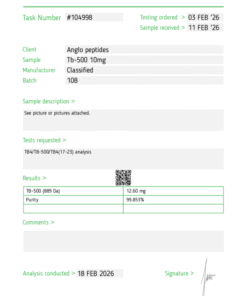
Important considerations may include peptide identity, stated quantity,
formulation, product presentation and storage information where
supplied.
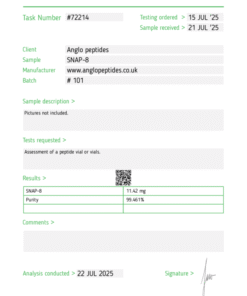
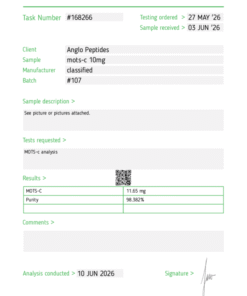
Researchers should verify the precise specifications and analytical
documentation associated with the material before beginning an
experimental protocol.
For delivery and fulfilment information, visit the
Anglo Peptides Shipping Policy
.
Why Peptide Characterisation Matters
Reliable research requires accurate identification and characterisation
of the material being investigated.
Peptide purity, formulation, degradation, storage conditions and
analytical methodology can all influence experimental outcomes.
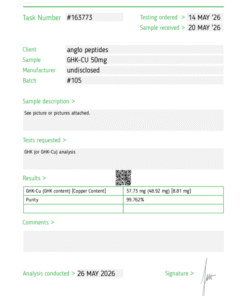
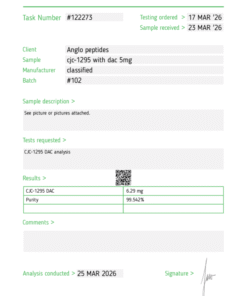
Researchers should therefore consider product-specific analytical
documentation alongside peer-reviewed literature when assessing an
experimental peptide.
AOD-9604 Compared With Other Research Peptides
AOD-9604 belongs to a different research category from several other
peptides in the Anglo Peptides catalogue.
Tirzepatide UK
– a distinct peptide-based pharmaceutical compound with a different
molecular structure and pharmacological profile.
Retatrutide UK
– an investigational multi-receptor agonist with a substantially
different mechanism from AOD-9604.
Frag 176-191
– another research peptide associated with a fragment of growth
hormone.
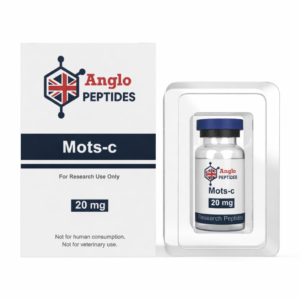
MOTS-c
– a separate experimental peptide investigated in metabolic and
mitochondrial research.
These materials are chemically and pharmacologically distinct and should
not be treated as interchangeable.
Research Limitations
Like other experimental peptides, AOD-9604 should be evaluated according
to the quality of the available evidence rather than marketing claims.
Cell-based and animal studies can provide valuable mechanistic
information, but they cannot independently establish human efficacy or
long-term safety.
Researchers should also distinguish between changes in laboratory
biomarkers and clinically meaningful outcomes.
Ordering AOD-9604 UK
Before ordering, researchers should review the available product
specifications and confirm that the intended purchase is appropriate for
legitimate laboratory or scientific research.
Customers and researchers are responsible for ensuring that their
purchase, possession, handling and intended research activities comply
with applicable laws, regulations and institutional requirements.
Explore additional research materials through the
Anglo Peptides Shop
.
Research-Use Notice
AOD-9604 products supplied through Anglo Peptides are presented strictly
for legitimate research purposes.
This material is not intended for human consumption, self-administration,
diagnosis, treatment or prevention of disease.
Anglo Peptides does not provide human dosing instructions, administration
protocols, treatment recommendations or medical advice. Researchers are
responsible for ensuring that their activities comply with applicable
legal, regulatory and institutional requirements.
Frequently Asked Questions
What is AOD-9604?
AOD-9604 is a synthetic peptide derived from a region of human growth
hormone that has been investigated primarily in relation to lipid
metabolism and adipose-tissue biology.
What is AOD-9604 researched for?
Research has examined lipid metabolism, fatty-acid biology, adipocyte
activity, lipolysis and related metabolic pathways.
Is AOD-9604 a growth hormone?
No. It is a synthetic peptide fragment derived from human growth hormone
rather than intact growth hormone itself.
Is AOD-9604 clinically proven for weight loss?
Research into lipid metabolism has generated scientific interest, but
experimental findings should not be interpreted as proof of an approved
or clinically established weight-loss treatment.
Is AOD-9604 an approved medicine?
AOD-9604 is presented here as experimental research material rather than
an approved medicinal product.
Where can I find AOD-9604 research?
Researchers can review
PubMed’s AOD-9604 research results
for peer-reviewed scientific literature.
Is this product intended for human use?
No. Products supplied through Anglo Peptides are presented strictly for
legitimate research purposes and are not intended for human consumption
or self-administration.
Reviews
There are no reviews yet.