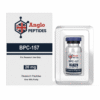

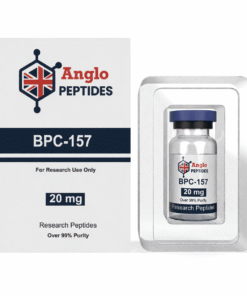

BPC 157 UK – BPC-157 Research Peptide
Anglo Peptides presents
BPC-157 as an experimental peptide material intended for
legitimate laboratory and scientific research. Also known as Body
Protection Compound 157, BPC-157 is a synthetic pentadecapeptide that
has attracted extensive interest in preclinical research.
Research has investigated this 15-amino-acid peptide across a range of
biological models, including gastrointestinal, vascular, musculoskeletal
and wound-related systems. Much of the published evidence remains
preclinical, making careful interpretation of the scientific literature
particularly important.
This page provides research and product information only. It does not
provide human dosing instructions, administration protocols, treatment
recommendations or instructions for personal use.
What Is BPC-157?
BPC-157 is a synthetic pentadecapeptide consisting of 15 amino acids. It
was derived from a sequence associated with a larger gastric protein and
has subsequently been investigated as an experimental peptide in
numerous laboratory and animal models.
The sequence commonly reported for BPC-157 is
GEPPPGKPADDAGLV. Its unusual stability in experimental
gastric conditions has contributed to scientific interest in its
biological properties and potential research applications.
Researchers can review the
PubChem BPC-157 chemical reference
for additional information about the compound’s molecular identity.
BPC-157 Research Background
BPC-157 research has developed over several decades,
with studies investigating the peptide in a wide range of experimental
models.
Published research has examined biological responses involving the
gastrointestinal tract, connective tissues, blood vessels, nervous
system and other organ systems. Proposed mechanisms have included
interactions with nitric-oxide signalling, vascular pathways and
cellular responses involved in tissue biology.
However, the quantity of preclinical research should not be confused with
established clinical efficacy. A 2026 peer-reviewed review describes the
peptide as investigational and highlights major gaps in formulation,
pharmacokinetic characterisation and clinical development. :contentReference[oaicite:1]{index=1}
BPC-157 and Tissue Research
One of the most frequently investigated areas is tissue biology.
Experimental studies have examined the peptide in models involving
tendons, ligaments, skeletal muscle, skin and other tissues.
A review published in Cell and Tissue Research examined the
available literature concerning BPC-157 and musculoskeletal soft-tissue
models. The authors noted that most research had been conducted in
animals and that efficacy had not yet been established in humans.
:contentReference[oaicite:2]{index=2}
This distinction is essential when evaluating research claims. Findings
from rodents or other experimental models can identify potentially useful
biological mechanisms, but they do not automatically predict equivalent
outcomes in human subjects.
Gastrointestinal Research
Gastrointestinal biology is another major area within the research
history of BPC-157.
Early research investigated the peptide in models involving gastric
injury and gastrointestinal tissue. Subsequent studies expanded into
different experimental models examining mucosal integrity, inflammation
and tissue responses.
These findings have contributed to continued scientific interest, but
they should be considered within the limitations of the available
experimental evidence rather than interpreted as proof of a validated
gastrointestinal treatment.
The published literature can be explored through this
PubMed record on BPC research and gastric biology
.
BPC-157 and Vascular Biology
Experimental research has also investigated the relationship between
BPC-157 and vascular signalling.
Proposed mechanisms in the literature include effects involving nitric
oxide pathways, endothelial signalling and vascular responses. These
mechanisms remain an active area of experimental investigation.
The biological complexity of these pathways means that individual
experimental findings should be evaluated within the specific model in
which they were obtained.
Researchers should avoid assuming that an observed molecular or vascular
effect in an animal model establishes a corresponding therapeutic effect
in humans.
BPC-157 and Cellular Research
Cellular studies provide another important component of the research
literature. Scientists have investigated possible interactions involving
cell survival, signalling molecules, vascular responses and tissue
remodelling.
These experiments can help identify potential molecular pathways for
further investigation and may provide hypotheses for future research.
At the same time, cell-based experiments cannot reproduce the complete
physiological environment of a living organism. Researchers should
therefore distinguish mechanistic evidence from whole-organism and
clinical evidence.
BPC-157 Research Evidence in 2026
The current evidence base is best described as predominantly
preclinical.
A comprehensive 2026 review found that BPC-157 has accumulated more than
three decades of preclinical research but remains underdeveloped from a
pharmaceutical and translational perspective. The review notes the
absence of an approved formulation, a validated dosing regimen and a
completed Phase II clinical trial. :contentReference[oaicite:3]{index=3}
This means that the peptide can be scientifically interesting without
having established clinical status. Researchers should evaluate the
quality, methodology and reproducibility of individual studies rather
than relying on the number of published experiments alone.
Why BPC-157 Remains an Experimental Peptide
Translating a laboratory peptide into an established therapeutic requires
considerably more than demonstrating biological activity in experimental
models.
Researchers need reliable pharmaceutical characterisation,
pharmacokinetic data, reproducible formulations, controlled clinical
studies and adequate safety information.
The 2026 review specifically identifies these translational barriers for
BPC-157, including limited human pharmacokinetic information and the lack
of a validated pharmaceutical formulation. :contentReference[oaicite:4]{index=4}
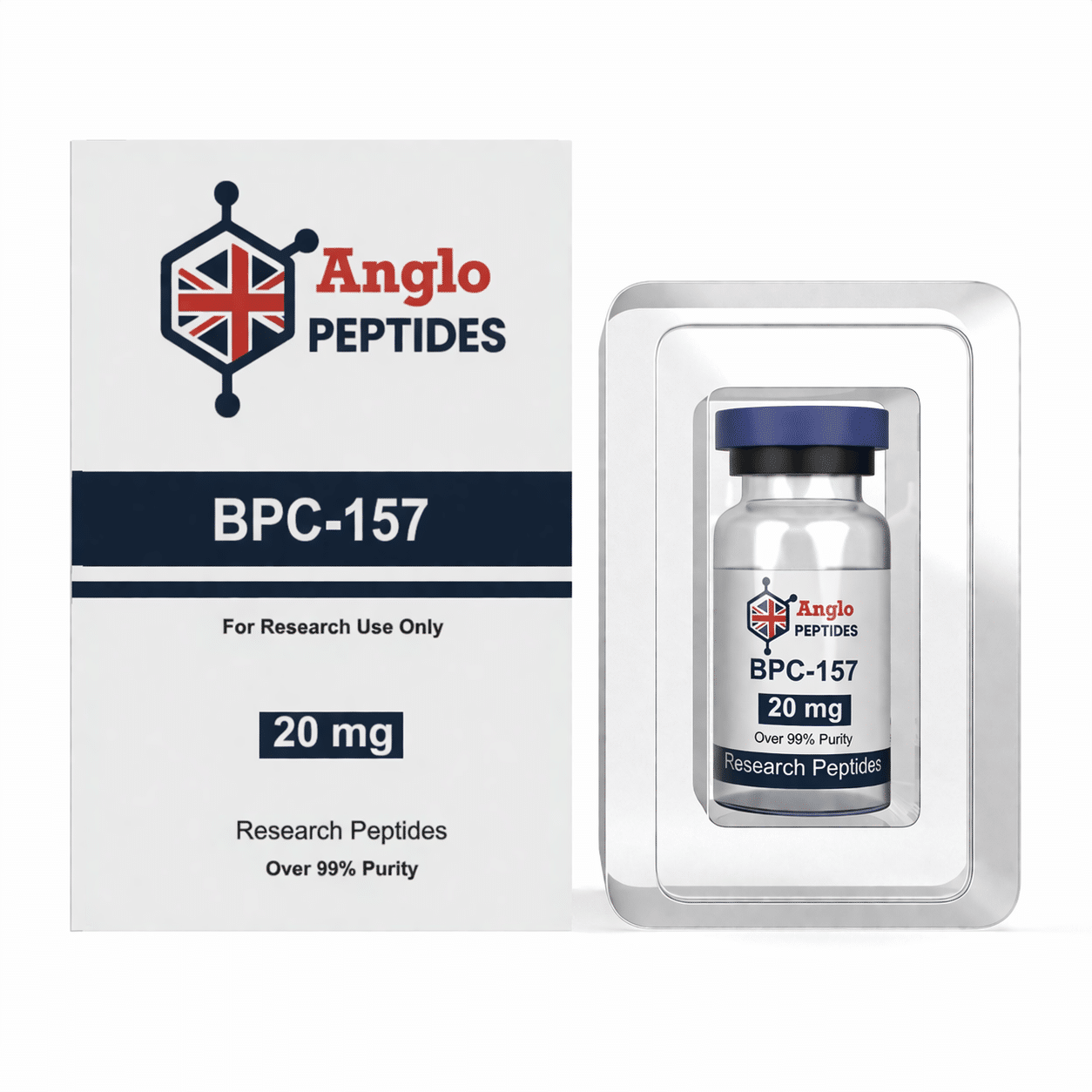
BPC-157 UK Product Information
Researchers searching for BPC 157 UK should review the
exact product specifications supplied with the material before beginning
laboratory work.
Relevant considerations may include peptide identity, stated quantity,
formulation, product presentation, storage information where supplied
and applicable fulfilment arrangements.
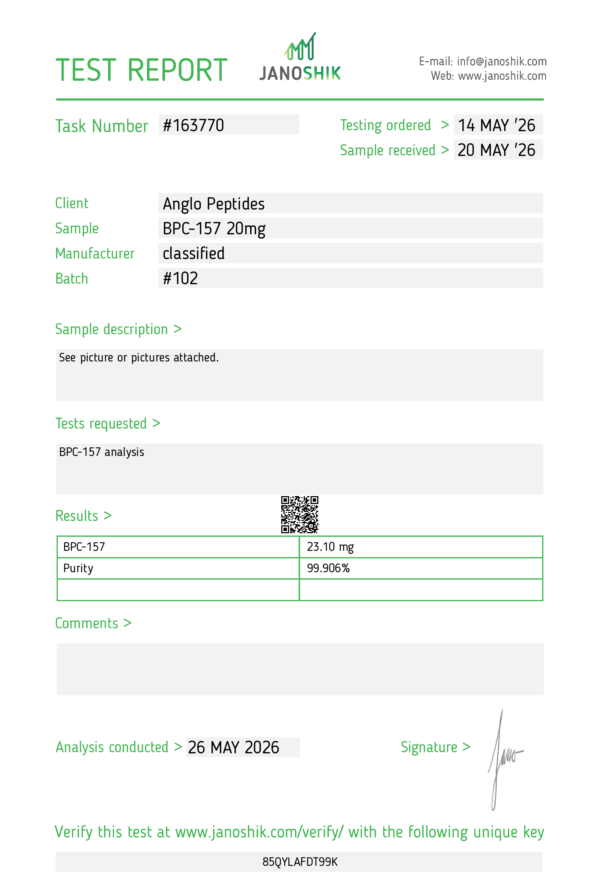
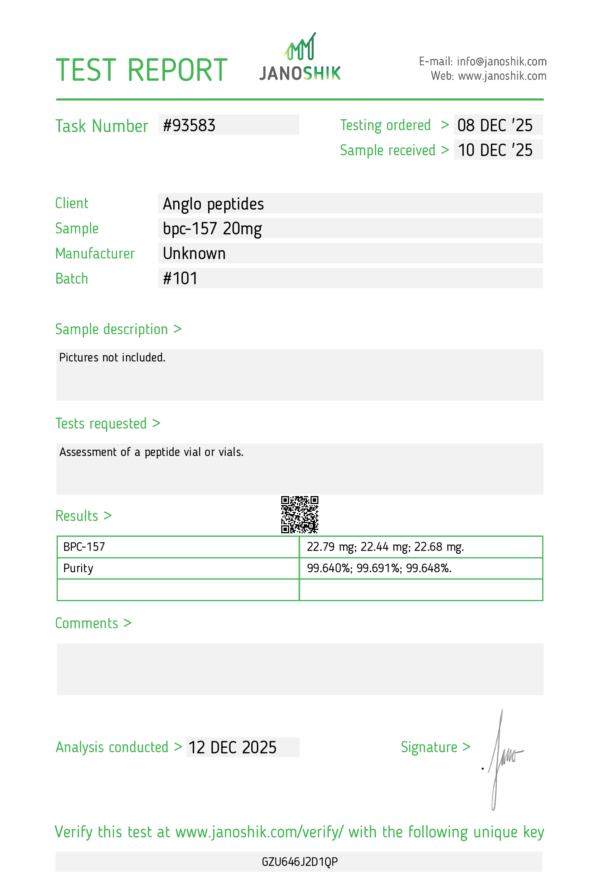
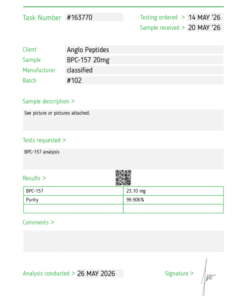
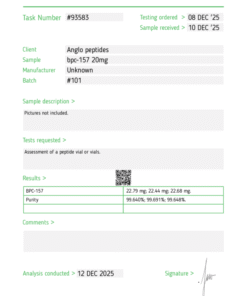
Researchers should verify the material’s specifications and analytical
documentation and determine whether it is suitable for their own
validated research procedures.
For delivery and fulfilment information, visit the
Anglo Peptides Shipping Policy
.
Research Quality and Peptide Characterisation
Reliable peptide research depends heavily on accurate material
characterisation. Differences in purity, formulation, storage conditions
and peptide-related impurities can influence experimental results.
This is particularly relevant for BPC-157 because recent regulatory
assessments have highlighted concerns relating to peptide impurities,
aggregation and immunogenicity for certain compounded routes of
administration. :contentReference[oaicite:5]{index=5}
Researchers should therefore consider analytical documentation and
material identity alongside the scientific literature when designing
experiments.
Areas of BPC-157 Research
Scientific investigation involving this peptide includes:
- Gastrointestinal biology
- Wound and tissue research
- Musculoskeletal research
- Vascular biology
- Cellular signalling
- Peptide pharmacology
- Preclinical drug-development research
- Pharmacokinetic and formulation studies
These categories describe experimental research areas and should not be
interpreted as approved therapeutic indications.
BPC-157 Compared With Related Research Peptides
Researchers investigating tissue and cellular biology may also encounter
several other experimental peptides. These materials are chemically
distinct and should not be treated as interchangeable.
TB-500
– a separate peptide research material investigated in tissue and
cellular models.
BPC-157 + TB-500
– a combination research formulation.
GHK-Cu
– a copper-associated peptide investigated in extracellular-matrix
and cellular research.
BPC-157 and TB-500
– another related combination product within the catalogue.
Researchers can also browse the complete
research peptide collection
for additional laboratory materials.
Current Safety and Regulatory Considerations
BPC-157 remains an experimental peptide and should not be represented as
an established medicine or clinically validated treatment.
The U.S. FDA currently identifies BPC-157 among bulk substances for which
compounded products may present significant safety concerns, including
potential immunogenicity and challenges involving peptide impurities and
active pharmaceutical ingredient characterisation. The FDA also states
that available safety information is limited for certain proposed routes
of administration. :contentReference[oaicite:6]{index=6}
These regulatory observations reinforce the importance of distinguishing
experimental research material from approved pharmaceutical products.
Ordering BPC 157 UK
Before ordering, researchers should review the available product
specifications and confirm that the intended purchase is appropriate for
legitimate laboratory or scientific research.
Customers and researchers are responsible for ensuring that their
purchase, possession, handling and intended research activities comply
with applicable laws, regulations and institutional requirements.
Explore additional research materials through the
Anglo Peptides Shop
.
Research-Use Notice
BPC-157 products supplied through Anglo Peptides are presented strictly
for legitimate research purposes.
This material is not intended for human consumption, self-administration,
diagnosis, treatment or prevention of disease.
Anglo Peptides does not provide human dosing instructions, administration
protocols, treatment recommendations or medical advice. Researchers are
responsible for ensuring that their activities comply with applicable
legal, regulatory and institutional requirements.
Frequently Asked Questions
What is BPC-157?
BPC-157 is a synthetic 15-amino-acid peptide that has been extensively
investigated in preclinical research involving gastrointestinal,
vascular, musculoskeletal and tissue biology.
What is BPC-157 researched for?
Research has investigated the peptide in areas including tissue biology,
gastrointestinal models, vascular signalling, wound-related research
and musculoskeletal systems.
Is BPC-157 clinically proven?
No. Although the preclinical literature is extensive, current reviews
continue to identify major gaps in human clinical evidence and
pharmaceutical development. :contentReference[oaicite:7]{index=7}
Is BPC-157 approved as a medicine?
BPC-157 does not have an approved pharmaceutical formulation established
by the FDA or equivalent major regulatory authorities. It remains an
experimental research peptide. :contentReference[oaicite:8]{index=8}
Is BPC-157 the same as TB-500?
No. BPC-157 and TB-500 are different experimental peptide materials with
different molecular identities and research histories.
Is this product intended for human use?
No. Products supplied through Anglo Peptides are presented strictly for
legitimate research purposes and are not intended for human consumption
or self-administration.

Reviews
There are no reviews yet.