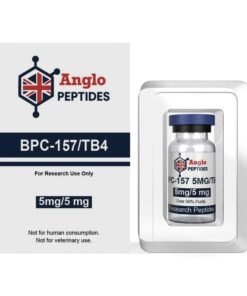
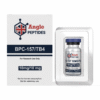
BPC 157 TB 500 UK – Research Peptide Combination
BPC 157 TB 500 refers to a research combination
containing two distinct experimental peptide materials: BPC-157 and
TB-500. Both compounds have attracted scientific interest in areas
including tissue biology, cellular signalling and musculoskeletal
research, although their molecular identities and research histories are
different.
Anglo Peptides presents this
product for legitimate laboratory and scientific research. The available
literature is predominantly preclinical, and evidence concerning the
combination itself should be distinguished from studies investigating
either component individually.
This page provides research and product information only. It does not
provide human dosing instructions, administration protocols, treatment
recommendations or guidance for personal use.
Understanding the Two Peptides
BPC-157 and TB-500 are not the same compound. BPC-157 is a synthetic
pentadecapeptide consisting of 15 amino acids, while TB-500 is commonly
used to refer to the thymosin beta-4 fragment known as LKKTETQ.
Their different structures and biological characteristics are important
when evaluating scientific literature. Research findings involving
BPC-157 should not automatically be attributed to TB-500, and evidence
involving thymosin beta-4 or its fragments should not automatically be
applied to BPC-157.
Researchers should therefore assess each component independently before
drawing conclusions about a combined formulation.
BPC-157 Research
BPC-157 has been investigated extensively in preclinical research. Studies
have explored gastrointestinal biology, vascular signalling,
musculoskeletal tissues, wound-related models and other experimental
systems.
Research has proposed several biological pathways, including mechanisms
involving nitric-oxide signalling, vascular responses and cellular
signalling. However, the majority of this evidence comes from
preclinical models.
A 2026 review describes BPC-157 as an investigational peptide with
substantial preclinical research but major translational limitations,
including the absence of an approved formulation and a validated dosing
regimen.
Read the
2026 BPC-157 review on PubMed
for additional scientific information.
TB-500 Research
TB-500 is commonly described as the thymosin beta-4 fragment
LKKTETQ. It should be distinguished from full-length
thymosin beta-4 when interpreting scientific publications.
Thymosin beta-4 has been investigated in relation to cellular migration,
actin regulation, angiogenesis and tissue biology. However, evidence
relating specifically to the TB-500 fragment is much more limited than
the broader literature on full-length thymosin beta-4.
This distinction matters because research involving full-length thymosin
beta-4 cannot automatically establish the same biological or clinical
properties for the TB-500 fragment.
The FDA’s current review identifies TB-500 as thymosin beta-4 fragment
(LKKTETQ) and notes the absence of identified human exposure data for
drug products containing the fragment.
BPC-157 and TB-500 Research
Interest in the combination comes primarily from the overlapping research
areas associated with the two compounds, particularly tissue and
musculoskeletal biology.
A recent orthopaedic peptide review discusses BPC-157 and TB-500 among
experimental peptides investigated in relation to tissue repair and
musculoskeletal research, while also emphasising the current lack of
adequate clinical trials.
Researchers can review the
2026 review of therapeutic peptides in orthopaedics
for broader scientific context.
Importantly, research involving the two peptides individually does not
establish that combining them produces a proven synergistic effect.
Combination-specific evidence must be evaluated separately.
Musculoskeletal Research
Musculoskeletal research is one of the areas where both compounds are
frequently discussed.
BPC-157 has been investigated in experimental tendon, ligament, muscle
and other soft-tissue models. Reviews have reported promising
preclinical observations while noting that human efficacy remains
unconfirmed.
TB-500 is associated with research into thymosin beta-4 biology and
cellular processes relevant to tissue responses. However, evidence
concerning the fragment itself should be separated from the larger
thymosin beta-4 literature.
These distinctions are essential when interpreting claims surrounding a
combined research product.
Cellular and Molecular Research
Both compounds have been studied in experimental systems involving
cellular signalling and tissue biology, but they do not operate as
identical molecules.
Research into BPC-157 has examined pathways involving endothelial
signalling, nitric oxide and other cellular mechanisms. Research
involving thymosin beta-4 has investigated actin regulation, cell
migration and angiogenesis.
These biological pathways provide areas for further investigation, but
molecular observations should not be interpreted as evidence of a
clinically established treatment effect.
What Does the Evidence Actually Show?
The evidence base for this product needs to be considered carefully.
There is substantially more preclinical research on BPC-157 than there is
on the specific BPC-157/TB-500 combination.
A 2026 review of unapproved peptide therapies identifies BPC-157 and
TB-500 among experimental peptides being investigated or marketed in the
musculoskeletal and sports-performance space, while highlighting the
distinction between approved peptide medicines and compounds operating
outside established regulatory pathways.
Read the 2026 peptide safety and efficacy review on PubMed
.
At present, evidence from individual peptides should not be presented as
proof that a combined formulation has established clinical efficacy.
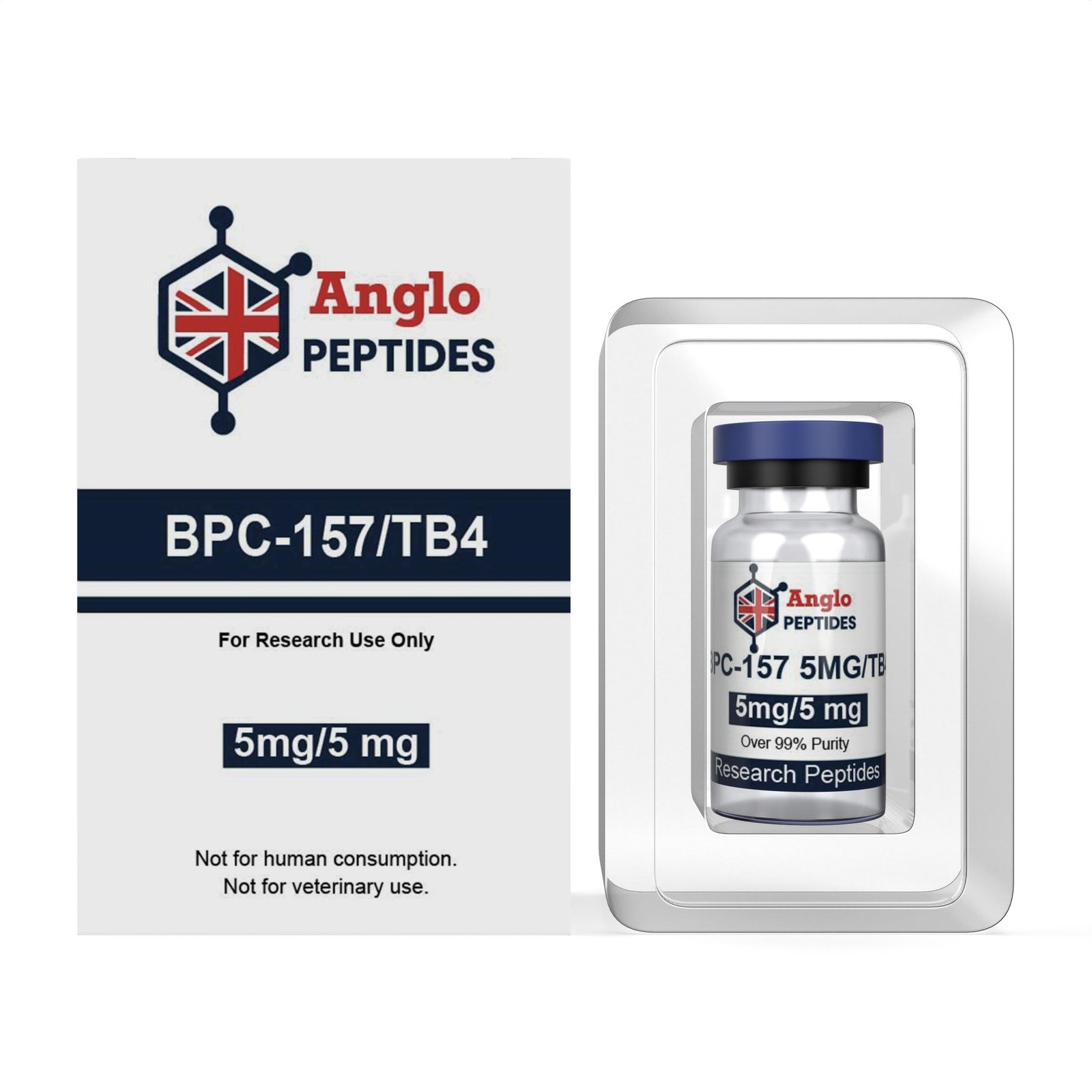
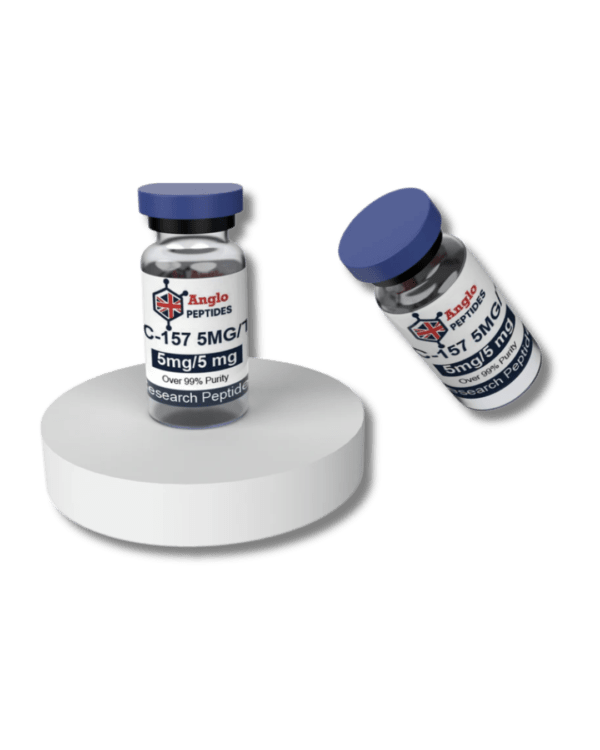
BPC-157 TB-500 UK Product Information
Researchers searching for BPC-157 TB-500 UK should
review the exact formulation and product specifications before beginning
laboratory work.
Important considerations may include the identity of each peptide,
stated quantities, formulation, product presentation, storage
information where supplied and applicable fulfilment arrangements.
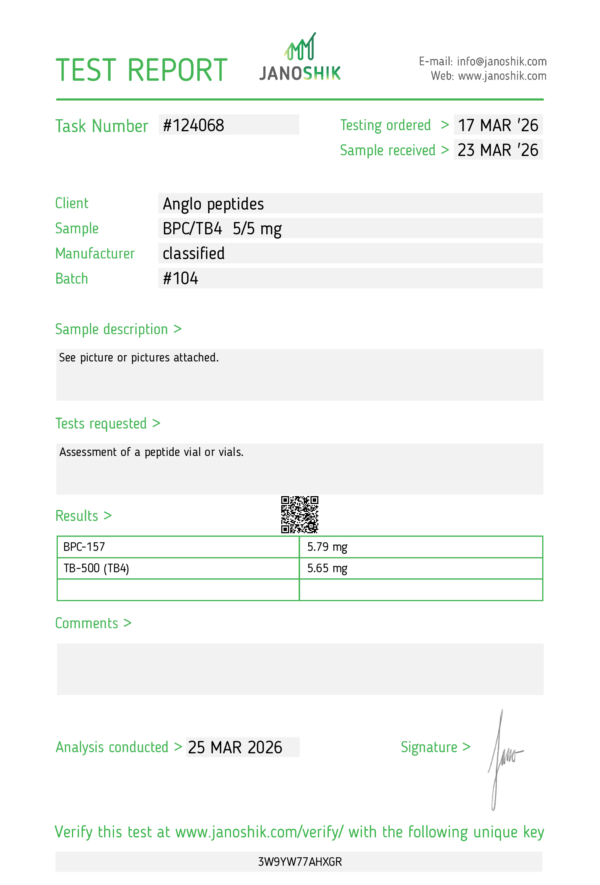
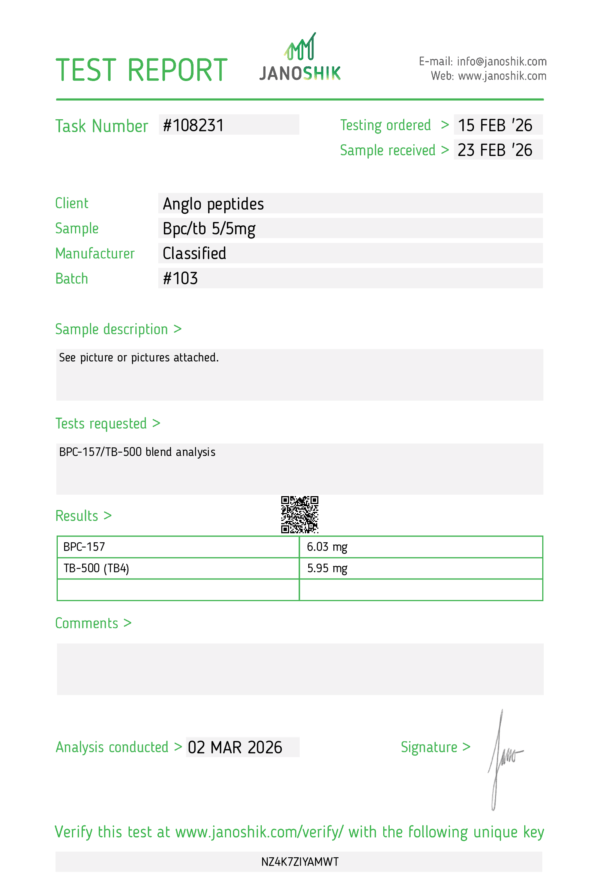
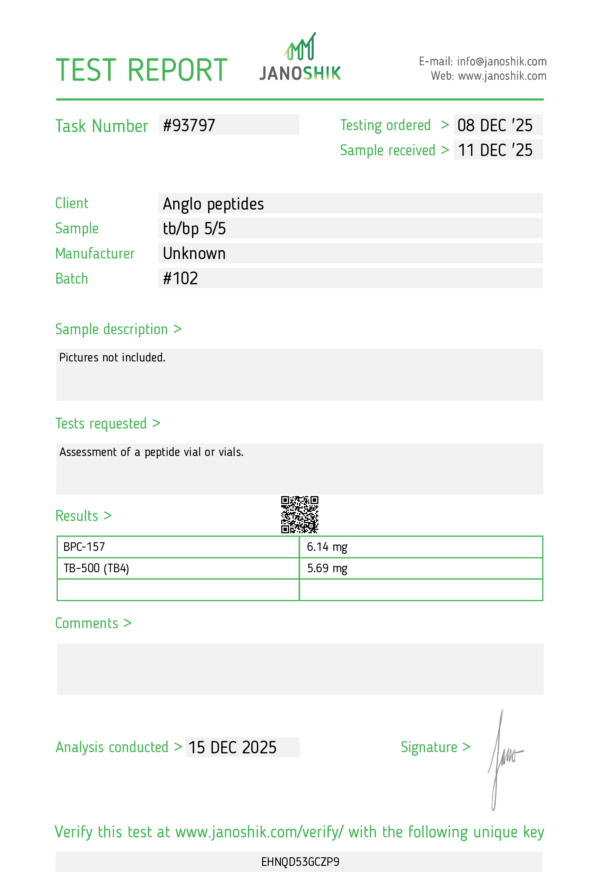
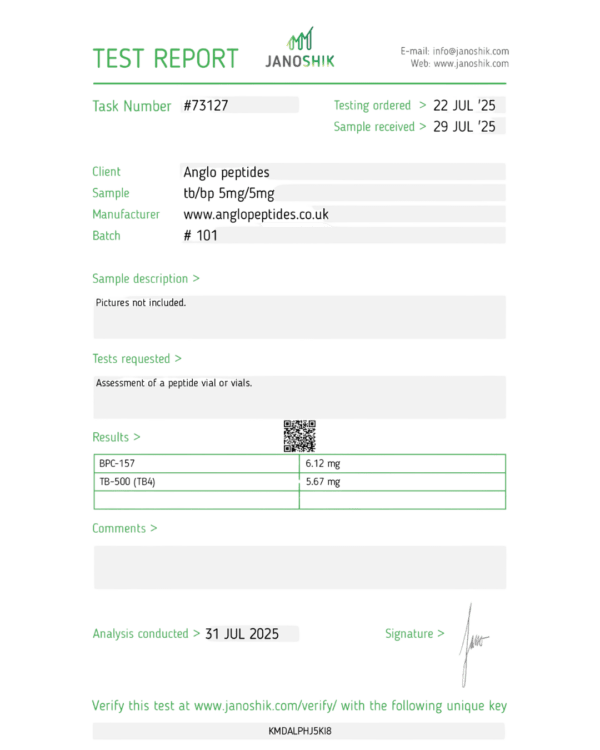
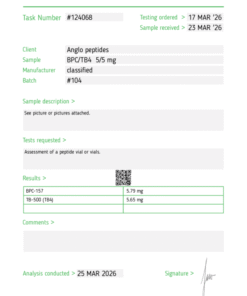
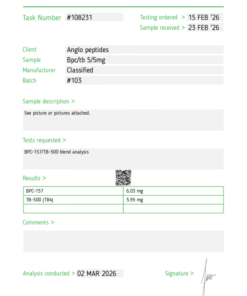
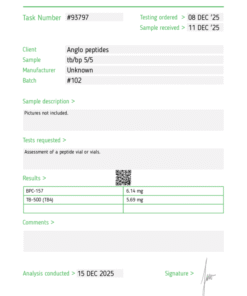
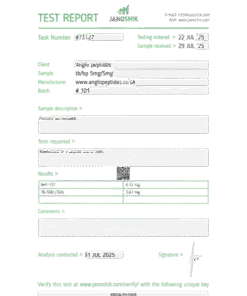
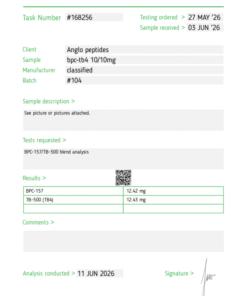
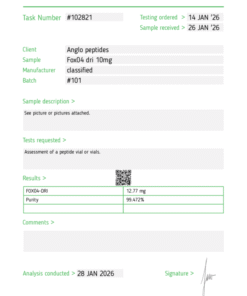
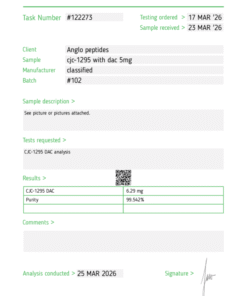
Researchers should verify the precise composition and analytical
documentation associated with the material before incorporating it into
an experimental protocol.
For delivery information, review the
Anglo Peptides Shipping Policy
.
Why Peptide Characterisation Matters
Accurate peptide research depends on knowing precisely which compound is
being studied. This is particularly important for TB-500 because the term
is commonly used commercially for a thymosin beta-4 fragment, while much
of the scientific literature concerns full-length thymosin beta-4.
BPC-157 also presents formulation and characterisation challenges. The
FDA currently identifies potential concerns involving peptide-related
impurities, aggregation and immunogenicity for certain compounded
BPC-157 and TB-500 products.
Researchers should therefore consider peptide identity, purity,
analytical documentation and formulation characteristics when evaluating
experimental material.
Research Areas
Scientific investigation involving these compounds can include:
- Musculoskeletal biology
- Soft-tissue research
- Cellular signalling
- Vascular biology
- Extracellular-matrix research
- Angiogenesis research
- Peptide pharmacology
- Preclinical tissue models
These are research categories rather than approved therapeutic
indications.
Current Safety and Regulatory Considerations
Neither BPC-157 nor TB-500 should be represented as an established
pharmaceutical treatment on the basis of preclinical research alone.
In its current assessment, the FDA states that compounded BPC-157 may
present risks related to immunogenicity and peptide impurities, while
TB-500 may present immunogenicity concerns associated with aggregation
and peptide-related impurities. The agency also reports that it has not
identified human exposure data for drug products containing TB-500.
Researchers should take these limitations into account when evaluating
experimental peptide materials and should follow appropriate laboratory
safety procedures.
Related Research Peptides
Researchers interested in related materials can compare this combination
with other products in the Anglo Peptides catalogue:
BPC-157 UK
– standalone BPC-157 research material.
TB-500 Peptide
– standalone TB-500 research material.
BPC-157 and TB-500
– another related combination listing.
GHK-Cu
– a separate peptide associated with cellular and extracellular-matrix
research.
Browse the complete
research peptide collection
for additional laboratory materials.
Ordering BPC-157 TB-500 UK
Before ordering, researchers should review the available specifications
and confirm that the intended purchase is appropriate for legitimate
laboratory or scientific research.
Customers and researchers are responsible for ensuring that their
purchase, possession, handling and intended research activities comply
with applicable laws, regulations and institutional requirements.
Explore additional laboratory materials through the
Anglo Peptides Shop
.
Research-Use Notice
BPC-157 and TB-500 products supplied through Anglo Peptides are presented
strictly for legitimate research purposes.
These materials are not intended for human consumption,
self-administration, diagnosis, treatment or prevention of disease.
Anglo Peptides does not provide human dosing instructions, administration
protocols, treatment recommendations or medical advice. Researchers are
responsible for ensuring that their activities comply with applicable
legal, regulatory and institutional requirements.
Frequently Asked Questions
What is BPC 157 TB 500?
It refers to a research combination containing BPC-157 and TB-500, two
chemically distinct experimental peptide materials.
Are BPC-157 and TB-500 the same peptide?
No. BPC-157 is a synthetic pentadecapeptide, while TB-500 is commonly
identified as the thymosin beta-4 fragment LKKTETQ.
What are these peptides researched for?
Research has examined BPC-157 in gastrointestinal, vascular,
musculoskeletal and tissue models. Research associated with thymosin
beta-4 and its fragments includes cellular migration, angiogenesis and
tissue biology.
Does research prove that combining them is synergistic?
No. Research on the individual compounds does not establish a proven
synergistic effect for every combination formulation.
Are BPC-157 and TB-500 approved medicines?
They are experimental research materials rather than established approved
pharmaceutical treatments.
Is there a validated human dosage?
No validated human dosing regimen for this combination has been
established by adequate clinical evidence.
Is this product intended for human use?
No. Products supplied through Anglo Peptides are presented strictly for
legitimate research purposes and are not intended for human consumption
or self-administration.
Reviews
There are no reviews yet.