

Methylene Blue UK – Research Compound
Anglo Peptides provides
Methylene Blue UK within its research-focused catalogue
for legitimate laboratory and scientific research. Methylene blue, also
known as methylthioninium chloride, is a synthetic redox-active compound
with a long history of use in chemistry, microbiology, pharmacology and
medicine.
Its distinctive chemical and redox properties have made methylene blue an
established subject of biochemical and pharmacological research. Scientists
have investigated the compound in areas including electron transfer,
mitochondrial biology, cellular redox processes and pharmacology.
This page is intended to provide research and product information. It is
not medical advice and does not provide instructions for personal use,
dosing or administration.
What Is Methylene Blue?
Methylene blue is a synthetic phenothiazine compound that can participate
in reversible oxidation-reduction reactions. Its ability to move between
oxidised and reduced states is an important part of its chemical and
biological behaviour.
The compound has historically been used as a biological stain and has also
been investigated in pharmaceutical and biochemical settings. Its diverse
pharmacological profile has resulted in research across several scientific
disciplines.
Researchers can review the
peer-reviewed literature on methylene blue pharmacology
through PubMed for additional scientific background.
Methylene Blue Research Background
Modern methylene blue research extends beyond the
compound’s historical application as a laboratory stain. Researchers have
investigated its redox chemistry, mitochondrial interactions and effects
on different biochemical pathways.
Methylene blue can participate in electron-transfer processes because of
its reversible redox behaviour. This property has made it particularly
interesting in studies involving cellular respiration and mitochondrial
function.
Scientific reviews have described methylene blue as a compound with
multiple pharmacological mechanisms rather than a substance with a single
biological target. Researchers should therefore evaluate individual
mechanisms and experimental findings within the context of each study.
Methylthioninium Chloride and Methylene Blue
Methylthioninium chloride is the pharmaceutical name
associated with methylene blue. The terms are commonly used in medical and
scientific literature when referring to the same active chemical compound,
although the formulation and intended application of a particular product
remain important considerations.
Methylthioninium chloride has an established medicinal history, including
use in the management of acquired methaemoglobinaemia. This pharmaceutical
history should be distinguished from research materials supplied for
laboratory investigation.
Researchers should always verify the identity, formulation, purity and
intended use of the specific material being studied rather than assuming
that every product labelled “methylene blue” is equivalent to a licensed
medicinal formulation.
Methylene Blue and Mitochondrial Research
One area of continuing scientific interest involves the relationship
between methylene blue and mitochondrial electron-transfer processes.
Because the compound can participate in redox cycling, researchers have
investigated whether it can influence electron-transfer pathways under
specific experimental conditions.
Laboratory research has examined methylene blue in relation to components
of mitochondrial respiration and cellular redox balance. These findings
provide useful mechanistic information but should not automatically be
interpreted as evidence of an established therapeutic effect in humans.
A PubMed-indexed review discusses proposed mitochondrial mechanisms and
the compound’s ability to participate in electron-transfer reactions.
Researchers can
review the mitochondrial research on methylene blue
for additional scientific context.
Methylene Blue Research Areas
Scientific investigation of methylene blue covers a number of areas,
including:
- Redox chemistry
- Electron-transfer mechanisms
- Mitochondrial biology
- Cellular metabolism
- Pharmacology
- Biochemical research
- Photodynamic research
The breadth of research reflects the compound’s distinctive chemical
properties. However, evidence from one experimental setting should not
automatically be applied to another.
Methylene Blue UK Product Information
Researchers considering a methylene blue research compound
should review the specific product information provided on this page
before ordering.
Relevant product considerations may include the available quantity,
product presentation, storage information where provided and applicable
fulfilment arrangements.
Researchers should select material appropriate for their own validated
laboratory procedures and research requirements.
For delivery and fulfilment information, review the
Anglo Peptides Shipping Policy
.
UK Regulatory Context
Methylene blue has an established medicinal history in the United Kingdom.
The UK Medicines and Healthcare products Regulatory Agency has published
safety information concerning methylthioninium chloride and its authorised
medical use.
The MHRA has specifically highlighted potential central nervous system
toxicity and interactions involving serotonergic medicines. This is an
important distinction when considering methylene blue as a pharmacologically
active substance rather than simply as a laboratory dye.
For authoritative UK information, researchers can review the
MHRA safety information on methylthioninium chloride
.
Safety and Research Considerations
Methylene blue has pharmacological activity and should therefore be
handled according to appropriate laboratory safety procedures.
Published literature has described concentration-dependent effects and
potential adverse reactions. A peer-reviewed review has discussed
reported risks including haemolysis, methaemoglobinaemia, gastrointestinal
symptoms, hypertension and serotonergic toxicity in certain circumstances.
Researchers should consult relevant safety documentation and institutional
procedures when handling methylene blue and should avoid assuming that
information concerning one formulation applies to every commercially
available product.
Methylene Blue and Related Research Products
Researchers exploring biochemical, metabolic and cellular research can
also examine related materials available through the Anglo Peptides
catalogue.
NAD research product
– relevant to research involving cellular metabolism and redox biology.
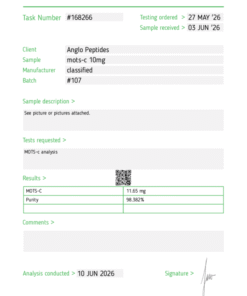
MOTS-c peptide
– a mitochondrial-derived peptide investigated in metabolic research.
SLU-PP 332
– a synthetic research compound investigated in relation to ERR
signalling and cellular metabolism.
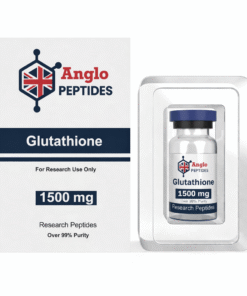
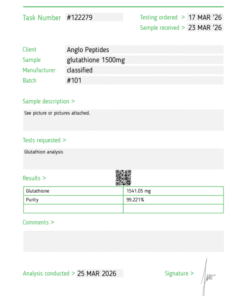
Glutathione 1500mg
– a research material relevant to redox and biochemical research.
Browse the complete
research peptide collection
to explore additional products.
Ordering Methylene Blue UK
Before ordering, researchers should review the available product
information and ensure that the intended purchase is appropriate for
legitimate laboratory and scientific research.
Customers and researchers are responsible for ensuring that their
purchase, possession, handling and intended research activities comply
with all applicable laws, regulations and institutional requirements.
To explore the wider catalogue, visit the
Anglo Peptides Shop
.
Research-Use Notice
Methylene blue products supplied through Anglo Peptides are presented
strictly for legitimate research purposes.
This product is not intended for human consumption, self-administration,
diagnosis, treatment or prevention of disease.
Anglo Peptides does not provide dosing instructions, administration
protocols, treatment recommendations or medical advice. Researchers are
responsible for ensuring that their activities comply with applicable
legal, regulatory and institutional requirements.
Frequently Asked Questions
What is methylene blue?
Methylene blue is a synthetic redox-active chemical compound with a long
history in laboratory science, pharmacology and medicine. Its reversible
oxidation-reduction properties make it an important subject of biochemical
research.
What is methylthioninium chloride?
Methylthioninium chloride is the pharmaceutical name associated with
methylene blue. Researchers should still verify the precise identity,
formulation and specifications of the material they are investigating.
What is methylene blue researched for?
Research has investigated methylene blue in areas including redox
chemistry, mitochondrial electron transfer, cellular metabolism,
pharmacology and photodynamic research.
Is methylene blue an authorised medicine in the UK?
Certain medicinal formulations of methylthioninium chloride are authorised
in the UK for specific medical uses. This does not mean that every
methylene blue product available online is an authorised medicinal product.
Is this product intended for human use?
No. Products supplied through Anglo Peptides are presented strictly for
legitimate research purposes and are not intended for human consumption
or self-administration.
Where can I find other research products?
Browse the
research peptide collection
or visit the
Anglo Peptides Shop
.
Explore Methylene Blue UK
Review the available Methylene Blue UK product information and explore
related research materials within the Anglo Peptides catalogue.

Reviews
There are no reviews yet.