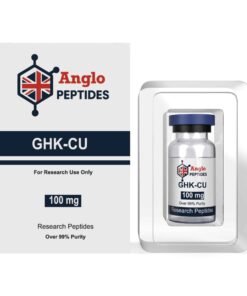
GHK Cu UK – GHK Copper Peptide Research
Anglo Peptides presents
GHK Cu as a research-focused peptide material for
legitimate laboratory and scientific investigation. GHK-Cu is the copper
complex of glycyl-L-histidyl-L-lysine (GHK), a naturally occurring
tripeptide found in human biological fluids.
The scientific interest surrounding GHK-Cu comes from its interaction with
copper and its involvement in research examining extracellular-matrix
biology, fibroblast activity, cellular signalling and tissue remodelling.
The compound has been investigated for several decades across laboratory
and preclinical research models.
This product information is intended for legitimate research purposes only.
It does not provide human dosing instructions, administration protocols,
treatment recommendations or guidance for personal use.
GHK Cu Explained
GHK Cu peptide refers to the copper-bound form of GHK,
whose full peptide sequence is glycyl-L-histidyl-L-lysine. GHK has a high
affinity for copper ions and can form the GHK-Cu complex under appropriate
biological conditions.
GHK occurs naturally in human plasma, saliva and urine. Research has
examined the peptide’s biological activity both independently and in its
copper-bound form.
The interaction between GHK and copper is particularly relevant to
researchers because copper participates in numerous enzymatic and
biochemical processes, while GHK provides a small peptide framework for
studying copper-associated biological activity.
For an independent scientific overview of GHK and its copper complex,
researchers can consult this
peer-reviewed GHK peptide research review
.
The Molecular Structure of GHK-Cu
GHK is a tripeptide consisting of three amino acids: glycine, histidine
and lysine. The histidine residue plays an important role in the peptide’s
ability to interact with copper.
When associated with copper ions, the resulting GHK-Cu complex provides a
useful model for investigating the relationship between peptide structure,
metal binding and cellular activity.
This molecular characteristic distinguishes GHK-Cu from conventional
peptide sequences that do not form comparable copper complexes.
Researchers interested in the molecular characteristics of GHK-Cu can
review the
PubChem GHK-Cu molecular reference
for additional chemical information.
GHK Cu Research and Cellular Biology
GHK Cu research has examined several cellular pathways,
particularly those associated with extracellular-matrix regulation and
fibroblast biology.
Experimental studies have investigated changes in collagen, elastin,
glycosaminoglycans and other extracellular-matrix components following
exposure to GHK-Cu.
Research has also explored the influence of GHK-Cu on matrix
metalloproteinases and their inhibitors. These enzymes are important
regulators of extracellular-matrix turnover and therefore provide useful
targets for studying tissue remodelling.
These findings provide a scientific rationale for continued investigation
of GHK-Cu but should not be interpreted as proof of a particular clinical
outcome in humans.
GHK Copper Peptide and Extracellular Matrix Research
One of the major areas of interest surrounding the
GHK copper peptide is extracellular-matrix biology.
The extracellular matrix contains structural proteins and signalling
molecules that influence cell attachment, migration and tissue
organisation. Researchers have investigated GHK-Cu in relation to
fibroblast activity and the production and breakdown of extracellular
matrix components.
Research has reported effects involving collagen, glycosaminoglycans,
proteoglycans and matrix-regulating enzymes in experimental systems.
A review published in the scientific literature discusses these
extracellular-matrix findings and the broader research history of GHK-Cu:
Regenerative and protective actions of GHK-Cu
.
GHK Cu and Fibroblast Research
Fibroblasts are important cells within connective tissue and are involved
in producing extracellular-matrix components. This makes them a useful
experimental model for studying GHK-Cu.
Laboratory research has examined how GHK-Cu affects fibroblast activity,
including the expression and production of structural matrix components.
These studies have contributed to the broader scientific interest in
copper-binding peptides and their relationship with cellular
extracellular-matrix processes.
Researchers should distinguish findings obtained in cultured cells from
evidence obtained in animal models or human clinical studies.
GHK Cu and Skin Biology Research
GHK-Cu is frequently studied in connection with skin biology because the
skin contains extensive extracellular-matrix structures and fibroblast
populations.
Experimental research has examined GHK-Cu in relation to collagen
synthesis, elastin, glycosaminoglycans, cellular migration and other
processes relevant to skin structure.
More recent research reviews continue to examine the potential role of
copper peptides in skin ageing and extracellular-matrix remodelling.
However, results depend on the specific formulation, concentration,
delivery method and experimental design.
A recent review of topical GHK research provides additional information
about the peptide’s biological activity and formulation considerations:
Topically applied GHK as an anti-wrinkle peptide
.
GHK Cu Research Areas
Scientific investigation involving GHK-Cu covers several areas of
laboratory research, including:
- Peptide and copper chemistry
- Extracellular-matrix biology
- Fibroblast research
- Collagen and elastin research
- Cellular signalling
- Skin biology
- Peptide-metal interactions
- Experimental tissue-remodelling research
These are areas of scientific investigation and should not be interpreted
as approved therapeutic indications for GHK-Cu.
GHK Cu UK Product Information
Researchers looking for GHK Cu UK should review the
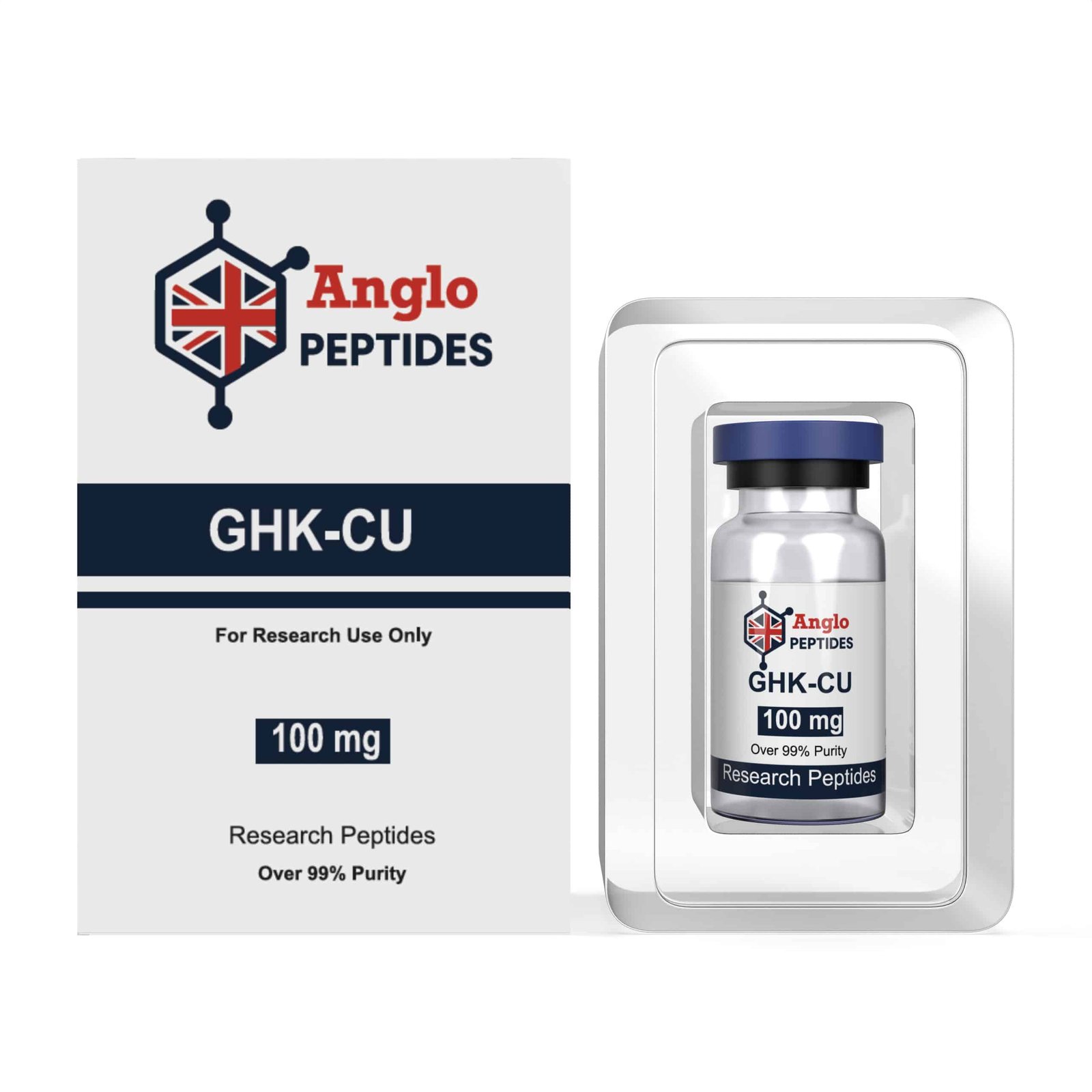
product specifications provided on this page before ordering.
Product considerations may include available quantity, presentation,
formulation, storage requirements where supplied and applicable
fulfilment arrangements.
Researchers should confirm the precise specifications of the material they
receive and determine its suitability for their own validated laboratory
procedures.
For delivery and fulfilment information, see the
Anglo Peptides Shipping Policy
.
GHK-Cu Compared With GHK
GHK and GHK-Cu are closely related but should not be treated as identical
materials.
GHK refers to the three-amino-acid peptide
glycyl-L-histidyl-L-lysine, while GHK-Cu describes the
copper-associated complex.
The presence of copper is scientifically important because it changes the
chemical environment of the peptide and contributes to the properties
investigated in copper-peptide research.
GHK Cu Research and Scientific Evidence
GHK-Cu has a relatively broad preclinical research history, but the
strength of evidence differs between experimental applications.
Cell-based studies can provide information about molecular mechanisms,
while animal models can provide additional biological context. Neither
automatically establishes the safety or effectiveness of a research
material for human use.
Researchers should therefore examine the original methodology, peptide
formulation and experimental conditions before drawing conclusions from
published GHK-Cu research.
Related Peptide Research
Researchers exploring GHK-Cu and related peptide biology can also review
other materials available through the Anglo Peptides catalogue.
GHK-Cu 50mg
– an alternative GHK-Cu research product.
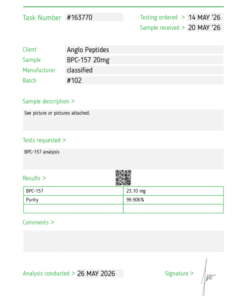
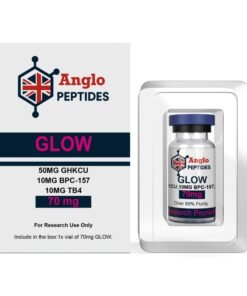
Glow Blend 70mg
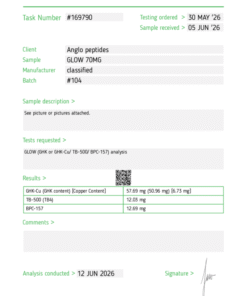
– a multi-peptide formulation containing GHK-Cu, BPC-157 and TB-500.
KLOW Peptide
– another multi-component research formulation incorporating GHK-Cu.
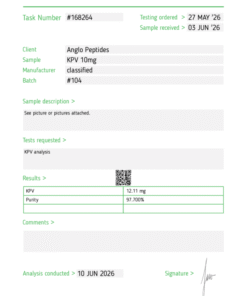
KPV Peptide
– an α-MSH-derived tripeptide investigated in cellular research.
Explore the wider
research peptide collection
for additional laboratory research materials.
GHK Cu Research Considerations
Researchers evaluating GHK-Cu should consider the difference between
naturally occurring GHK biology, copper-bound GHK-Cu and commercially
prepared research materials.
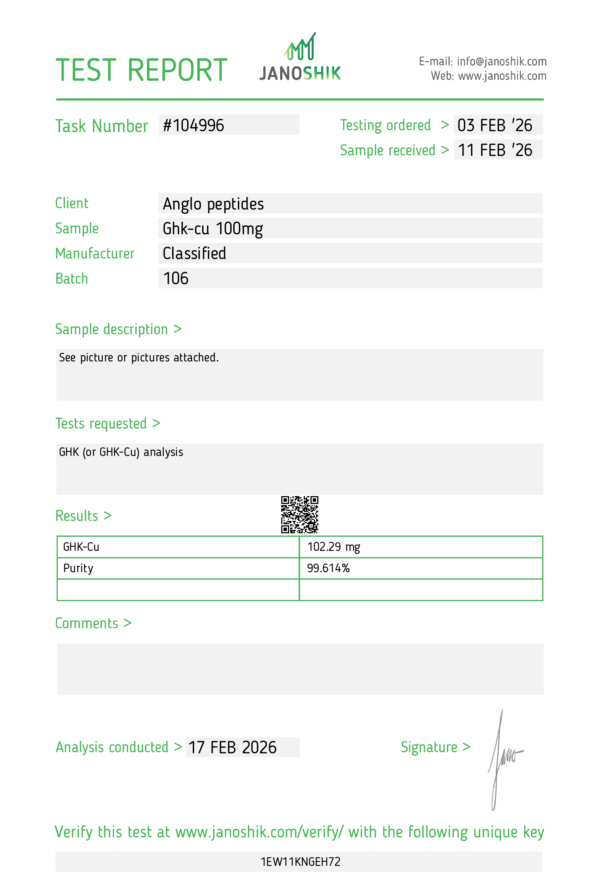
Purity, formulation, concentration and experimental conditions can all
affect research results. Different delivery systems should not
automatically be assumed to produce equivalent biological outcomes.
Published research should therefore be evaluated alongside the specific
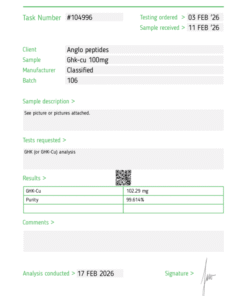
analytical and product documentation associated with the material being
investigated.
Research-Use and Safety Information
GHK-Cu is presented as a research material rather than an approved
medicinal product. The existence of laboratory or preclinical research
does not establish that a particular GHK-Cu product is safe or effective
for human administration.
Researchers should use appropriate laboratory handling procedures and
follow relevant institutional requirements when working with experimental
peptide materials.
Any conclusions about potential biological effects should be based on
appropriate scientific evidence rather than commercial claims.
Ordering GHK Cu UK
Before ordering, researchers should review the available product
information and confirm that the intended purchase is appropriate for
legitimate laboratory or scientific research.
Customers and researchers are responsible for ensuring that their
purchase, possession, handling and intended research activities comply
with applicable laws, regulations and institutional requirements.
To explore additional research products, visit the
Anglo Peptides Shop
.
Research-Use Notice
GHK-Cu products supplied through Anglo Peptides are presented strictly for
legitimate research purposes.
This product is not intended for human consumption, self-administration,
diagnosis, treatment or prevention of disease.
Anglo Peptides does not provide dosing instructions, administration
protocols, treatment recommendations or medical advice. Researchers are
responsible for ensuring that their activities comply with applicable
legal, regulatory and institutional requirements.
Frequently Asked Questions
What is GHK Cu?
GHK Cu, commonly written as GHK-Cu, is the copper-associated complex of
the naturally occurring tripeptide glycyl-L-histidyl-L-lysine.
What is GHK Cu researched for?
Research has investigated GHK-Cu in areas including extracellular-matrix
biology, fibroblast activity, collagen research, cellular signalling and
copper-peptide chemistry.
Is GHK Cu the same as GHK?
No. GHK is the tripeptide itself, while GHK-Cu refers to the copper-bound
form of the peptide.
Is GHK Cu a copper supplement?
No. GHK-Cu is a specific peptide-copper complex and should not be
considered equivalent to conventional dietary copper products.
Has GHK-Cu been researched in skin biology?
Yes. Experimental and clinical research has investigated GHK-Cu and
related copper peptides in areas including extracellular-matrix biology,
collagen-related processes and skin research. The strength of evidence
varies by application and formulation.
Is this product intended for human use?
No. Products supplied through Anglo Peptides are presented strictly for
legitimate research purposes and are not intended for human consumption
or self-administration.
Where can I find related products?
Explore the
GHK-Cu 50mg
product or browse the complete
research peptide collection
.
Explore GHK Cu UK
Review the available GHK Cu product information and explore related
research materials within the Anglo Peptides catalogue.
Reviews
There are no reviews yet.