BPC 157 Dosage – Research Evidence and Dosing Information
Questions about BPC 157 dosage are common because the
peptide has been investigated in numerous preclinical studies. However,
the doses reported in research should not be interpreted as an established
human dosing protocol.
BPC-157 is an experimental 15-amino-acid peptide that has been studied
primarily in laboratory and animal models. Research has explored several
biological systems, including gastrointestinal, vascular,
musculoskeletal and tissue-related models.
At present, there is no universally validated human dosage regimen
established through adequate clinical trials. This page explains the
distinction between experimental research dosing and clinically validated
human dosing.
What Does BPC-157 Dosage Mean in Research?
In scientific studies, dosage refers to the amount of a test substance
administered under a defined experimental protocol. Researchers may
report the quantity relative to body weight, concentration, exposure
period or another experimental measurement.
These measurements are designed for the specific research model being
investigated. A dose used in an animal experiment cannot automatically
be converted into an appropriate human dose.
This distinction is particularly important with BPC-157 because the
majority of published evidence remains preclinical.
BPC-157 Dosing Studies
Published BPC-157 dosing studies have used different
experimental protocols depending on the research question, animal model,
route of administration and study design.
Some experiments investigate local tissue responses, while others examine
systemic biological effects. Consequently, research papers may report
substantially different experimental exposure levels.
These differences do not indicate that one particular amount represents
a standard BPC-157 dose for people.
Why Research Doses Cannot Be Used as Human Dosing Instructions
Translating an experimental dose from an animal model into a human dose
requires considerably more information than simply adjusting the amount
according to body weight.
Researchers must consider factors including pharmacokinetics,
bioavailability, metabolism, tissue distribution, receptor activity,
route of administration and potential toxicity.
Without adequate human pharmacokinetic and clinical safety data, an
experimental dose cannot be assumed to have an equivalent effect in
humans.
The 2026 peer-reviewed review of BPC-157 specifically highlights gaps in
human pharmacokinetic information, pharmaceutical formulation and
clinical development.
View the BPC-157 review on PubMed
.
BPC-157 Dosage Research by Experimental Model
When reviewing a scientific paper, researchers should examine the complete
experimental protocol rather than extracting the reported dose in
isolation.
| Research factor | Why it matters |
|---|---|
| Animal species | Different species can process experimental compounds differently. |
| Route of administration | Bioavailability and exposure can vary substantially. |
| Study duration | Short-term exposure does not establish long-term safety. |
| Experimental endpoint | Different studies measure different biological outcomes. |
| Peptide formulation | Material characteristics can influence experimental results. |
This is why published research doses should be interpreted within the
context of the entire study.
BPC-157 Human Dosage: What Is Established?
There is currently no scientifically established human dosage regimen
that can be recommended for BPC-157.
A substantial portion of the available literature involves preclinical
models rather than adequately controlled human clinical trials.
The absence of an established dosage should not be interpreted as evidence
that the peptide is ineffective. Instead, it reflects the current stage
of research and the lack of sufficient clinical evidence to establish a
validated dosing standard.
BPC-157 Research Peptide Evidence
Research into BPC-157 has covered several areas, including gastrointestinal
biology, tissue responses, vascular signalling and musculoskeletal models.
A review of the peptide’s musculoskeletal literature found that much of
the available evidence came from animal research and that further
investigation was required before conclusions could be applied to human
treatment.
Researchers can review the
BPC-157 musculoskeletal research review
for additional scientific context.
Why BPC-157 Dosage Information Online Can Be Misleading
Online discussions frequently combine animal-study doses, anecdotal
experiences and unofficial protocols. These sources should not be treated
as equivalent to controlled clinical evidence.
A dosage reported on a forum or commercial website may lack information
about peptide purity, formulation, analytical testing, study population
or experimental methodology.
Researchers should instead prioritise peer-reviewed primary literature and
authoritative scientific databases when evaluating experimental dosing
information.
BPC-157 Dosage UK Research Considerations
Researchers searching for BPC-157 dosage UK information
should distinguish between legitimate research documentation and
instructions intended for human administration.
UK researchers should also ensure that the acquisition, possession,
handling and use of experimental peptide materials comply with applicable
laws, institutional policies and laboratory requirements.
Product specifications should be reviewed independently of any
experimental dosing information found in scientific literature.
Product Quality and Experimental Reproducibility
Accurate research depends on knowing the identity and characteristics of
the material being investigated.
Peptide purity, formulation, degradation, storage conditions and
analytical characterisation can all influence experimental observations.
The FDA has highlighted concerns relating to the characterisation,
impurities, aggregation and potential immunogenicity of compounded
BPC-157 products.
FDA safety information on BPC-157
.
Research-Use Notice
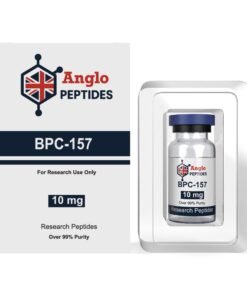
BPC-157 is presented by Anglo Peptides as an experimental research
material and not as an approved medicine.
No human dosage, administration schedule or self-administration protocol
is provided on this page because current evidence does not establish a
validated human dosing regimen.
This material is not intended for human consumption, self-administration,
diagnosis, treatment or prevention of disease.
Researchers are responsible for ensuring that their research activities
comply with applicable legal, regulatory and institutional requirements.
Related Research Products
Researchers interested in related experimental peptides can explore:
Browse the complete
research peptide collection
for additional laboratory materials.
Frequently Asked Questions
What is BPC-157 dosage?
BPC-157 dosage refers to the quantity and exposure parameters used in a
particular experimental protocol. Published research uses different
protocols depending on the model and research objective.
Is there an established human BPC-157 dose?
No. There is currently no adequately validated human dosing regimen that
can be recommended based on the available clinical evidence.
Can an animal-study dose be converted into a human dose?
Not reliably. Human dose selection requires appropriate pharmacokinetic,
pharmacodynamic and clinical safety data rather than a simple numerical
conversion.
Why do BPC-157 studies use different doses?
Experimental doses can vary because studies use different species,
administration routes, durations, formulations and biological endpoints.
Is BPC-157 approved as a medicine?
BPC-157 remains an investigational peptide and does not have an approved
pharmaceutical formulation established by major regulatory authorities.
Where can I find the scientific evidence?
Researchers can consult
PubMed’s BPC-157 research database
for peer-reviewed studies and reviews.

Reviews
There are no reviews yet.