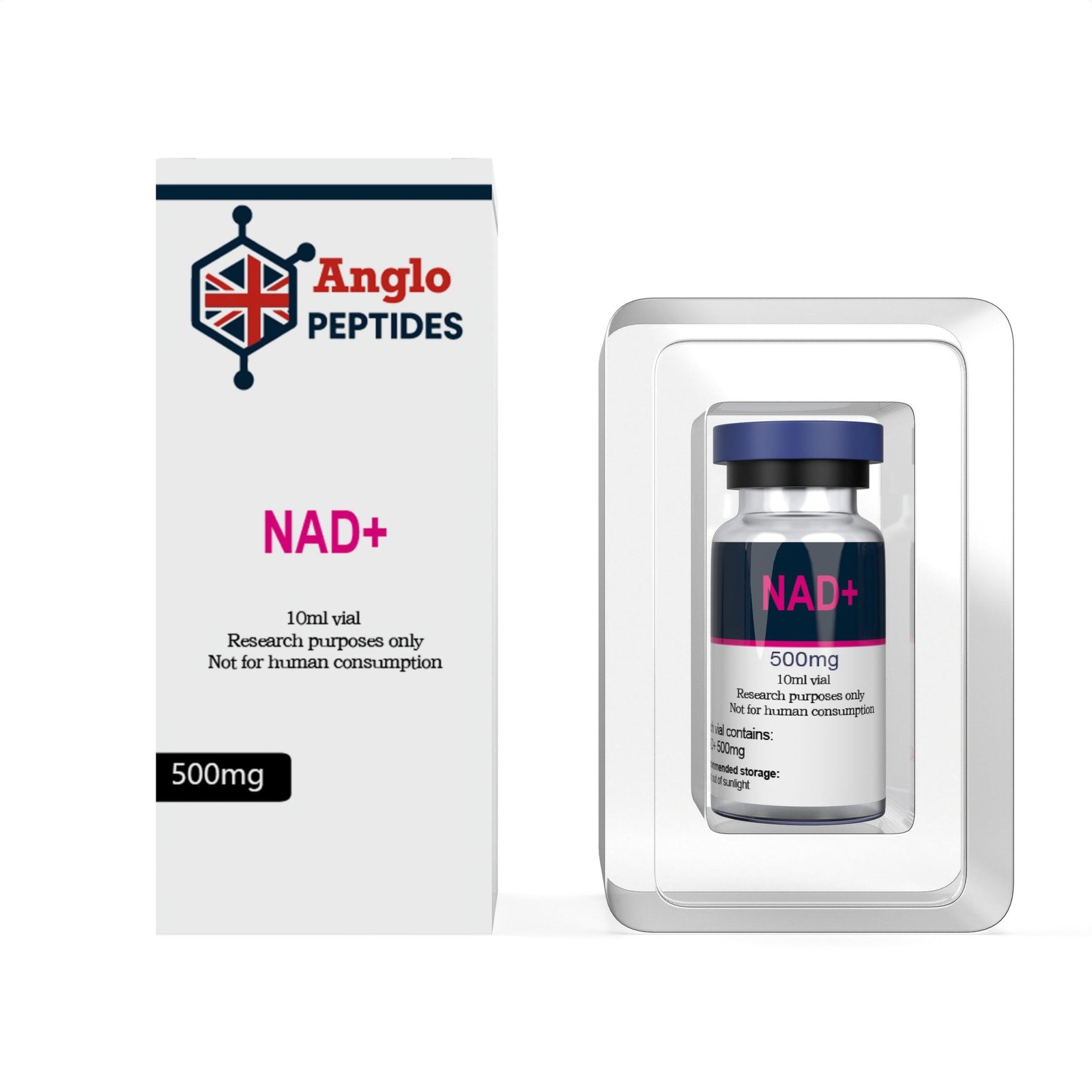
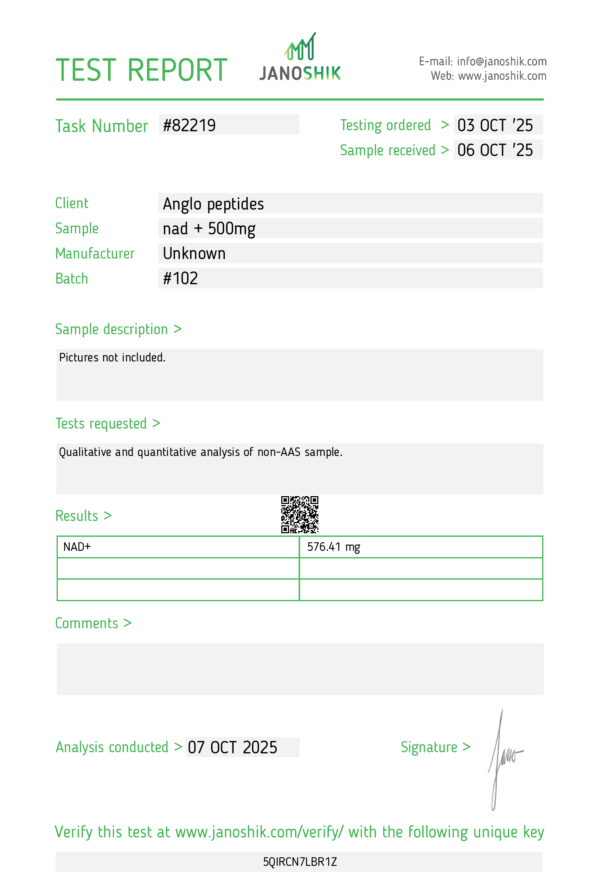
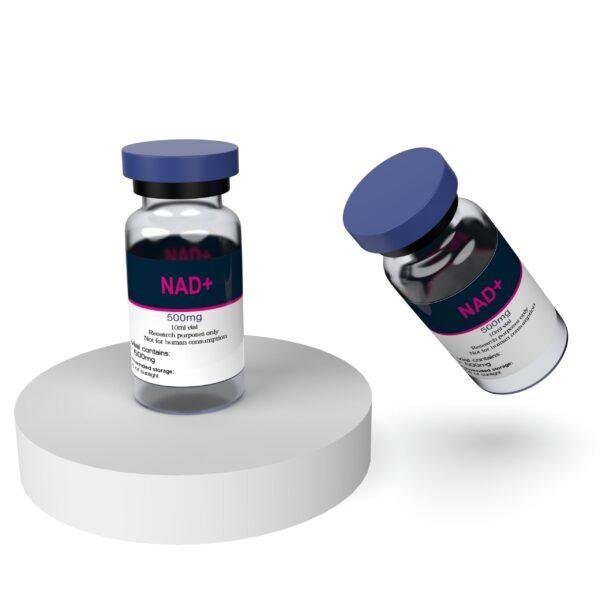
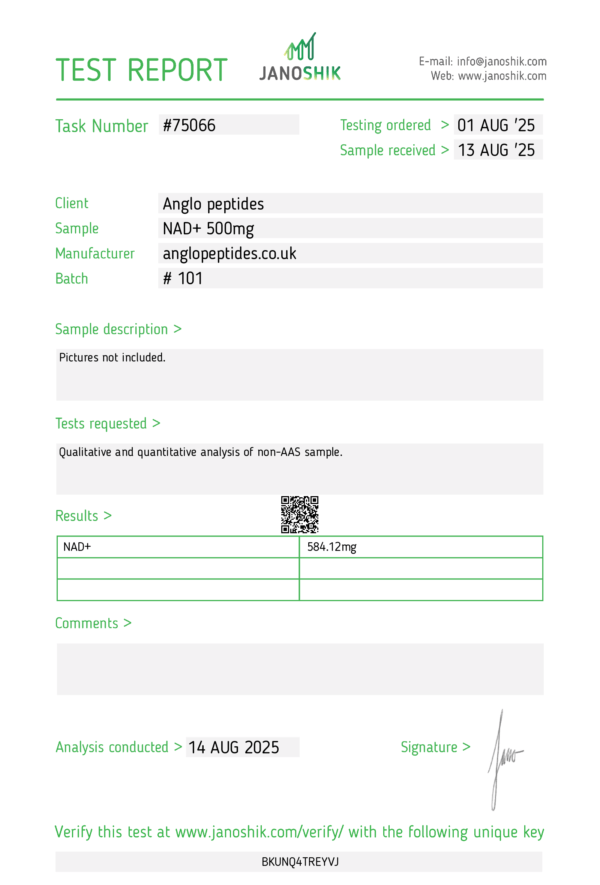
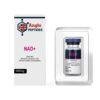
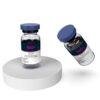
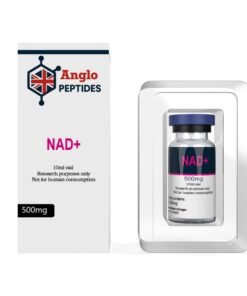
NAD Injections UK – NAD+ Research Product
Anglo Peptides provides
NAD injections within a research-focused catalogue for
legitimate laboratory and scientific research. NAD+, or nicotinamide
adenine dinucleotide, is an essential cellular coenzyme involved in
numerous oxidation-reduction reactions and energy-related metabolic
processes.
Research involving NAD+ spans cellular metabolism, mitochondrial biology,
redox regulation and other areas of biochemical science. This page provides
scientific and product information only and is not intended to provide
instructions for injection, dosing or personal use.
What Is NAD+?
Nicotinamide adenine dinucleotide, commonly abbreviated as NAD+ in its
oxidised form, is a naturally occurring coenzyme found throughout living
cells. It participates in redox reactions that help cells transfer energy
between molecules.
NAD+ is also involved in biochemical pathways associated with cellular
signalling and enzyme activity. Because of its broad role in cellular
metabolism, NAD+ has become an important subject of laboratory and
biomedical research.
Researchers interested in the behaviour of directly administered NAD+ can
review the
human pilot study examining NAD+ during intravenous infusion
.
The study investigated changes in plasma and urinary NAD-related
metabolites following a prolonged intravenous infusion.
NAD+ Research Background
NAD+ research covers a broad range of scientific disciplines. Researchers
have investigated its role as a cofactor for enzymes involved in cellular
metabolism, redox balance and other biochemical processes.
Interest in NAD+ has also increased alongside research into NAD-related
precursors and pathways that influence cellular NAD availability.
However, research involving NAD+ itself should be distinguished from
studies involving compounds such as nicotinamide riboside or nicotinamide
mononucleotide.
A recent systematic review of preclinical and clinical evidence concluded
that NAD-related interventions demonstrate biological activity, while
evidence for broader anti-ageing or wellness outcomes remains inconclusive.
Researchers can review the
2026 systematic review of NAD+ supplementation research
.
NAD Injections and Research
Direct parenteral administration of NAD+ has been investigated in human
research, including studies examining pharmacokinetics, tolerability and
changes in NAD-related metabolites.
A recent retrospective study comparing commercially administered NAD+
intravenous infusions with nicotinamide riboside reported differences in
infusion tolerability and highlighted the need for additional research into
the safety and effectiveness of parenteral NAD+ approaches.
The study reported gastrointestinal symptoms, increased heart rate and
chest pressure among some participants receiving NAD+ infusions. These
findings demonstrate why injectable NAD+ research should be approached
within appropriate scientific and clinical frameworks rather than treated
as equivalent to ordinary nutritional supplementation.
Researchers can review the
recent human NAD+ intravenous tolerability study
for additional scientific context.
Important Considerations for Injectable NAD+
Injectable materials require considerably different quality and safety
considerations from products intended for laboratory analysis or oral
research. Sterility, endotoxin control, ingredient identity and appropriate
manufacturing processes are particularly important when a substance is
intended for parenteral administration.
The U.S. Food and Drug Administration has specifically warned compounders
about the use of food-grade NAD+ ingredients in sterile preparations. The
agency reported that food-grade ingredients are not automatically suitable
for sterile drug compounding and highlighted adverse events associated
with some NAD+ injectable products.
Researchers can review the
FDA safety communication concerning NAD+ and sterile compounding
for additional information.
NAD Injections UK Product Information
Researchers considering an NAD+ injection research product
should review the specific product information provided by Anglo Peptides
before ordering.
Relevant considerations may include the product presentation, quantity,
storage requirements where provided and applicable fulfilment information.
For delivery information, please review the
Anglo Peptides Shipping Policy
.
NAD+ and Related Research Products
Researchers interested in cellular metabolism, mitochondrial biology and
peptide research may also explore related materials available through
Anglo Peptides.
MOTS-c peptide
– a peptide associated with mitochondrial and metabolic research.
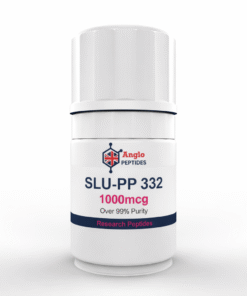
SLU-PP-332
– a synthetic research compound investigated in relation to ERR
signalling and cellular metabolism.
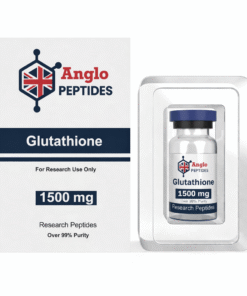
Glutathione 1500mg
– a research material relevant to redox and biochemical research.
Methylene Blue UK
– a separate compound with an established history of biochemical and
pharmacological research.
Browse the complete
research peptide collection
to explore additional research materials.
Research-Use Information
NAD+ products supplied through Anglo Peptides are presented strictly for
legitimate research purposes.
This product is not intended for human consumption, self-administration,
diagnosis, treatment or prevention of disease.
Anglo Peptides does not provide injection instructions, dosing protocols,
administration techniques or treatment recommendations. Researchers are
responsible for ensuring that their intended research activities comply
with applicable laws, regulations and institutional requirements.
Ordering NAD Injections UK
Before placing an order, researchers should review the available product
information and confirm that the intended purchase is appropriate for
legitimate research purposes.
Customers should independently verify any legal, regulatory, institutional
or import requirements applicable to their location and intended research.
To explore additional products, visit the
Anglo Peptides Shop
.
Frequently Asked Questions
What are NAD injections?
NAD injections refer to injectable preparations containing nicotinamide
adenine dinucleotide, a naturally occurring cellular coenzyme involved in
numerous biochemical and redox processes.
What is NAD+ researched for?
NAD+ is researched across areas including cellular metabolism, redox
biology, mitochondrial function and enzyme activity. Research into direct
parenteral NAD+ administration remains an evolving field.
Is NAD+ injection research established for anti-ageing or wellness?
Current evidence does not establish broad anti-ageing or wellness benefits
for intravenous or other parenteral NAD+ administration. A 2026 systematic
review identified limited evidence for direct parenteral NAD+ outcomes and
called for additional well-designed research.
Are injectable NAD+ products the same as NAD+ supplements?
No. Injectable products involve different manufacturing, sterility,
quality-control and administration considerations from oral supplements or
NAD+ precursors.
Where can I find other research products?
Browse our
research peptide collection
or visit the
Anglo Peptides Shop
.
Explore NAD Injections
Review the available NAD+ product information and explore related research
materials within the Anglo Peptides catalogue.
Reviews
There are no reviews yet.