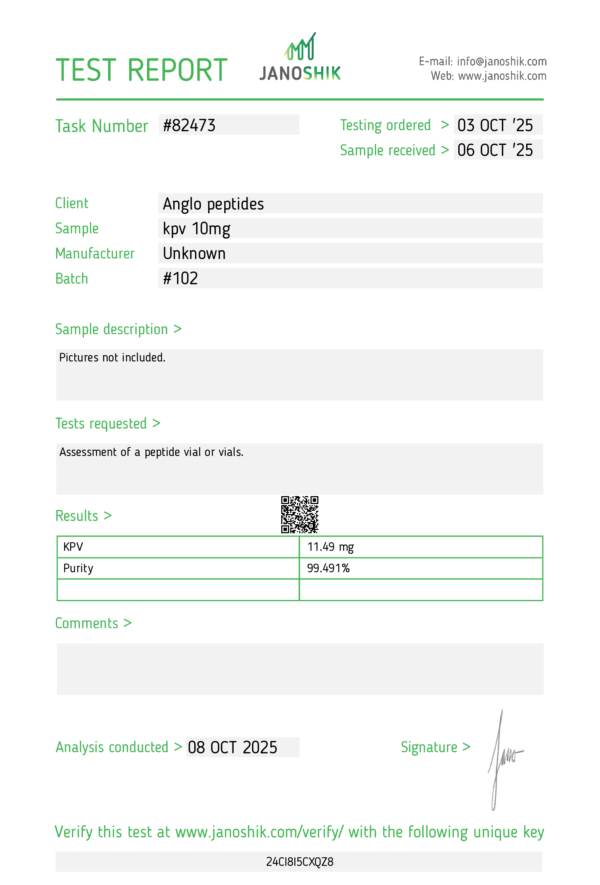
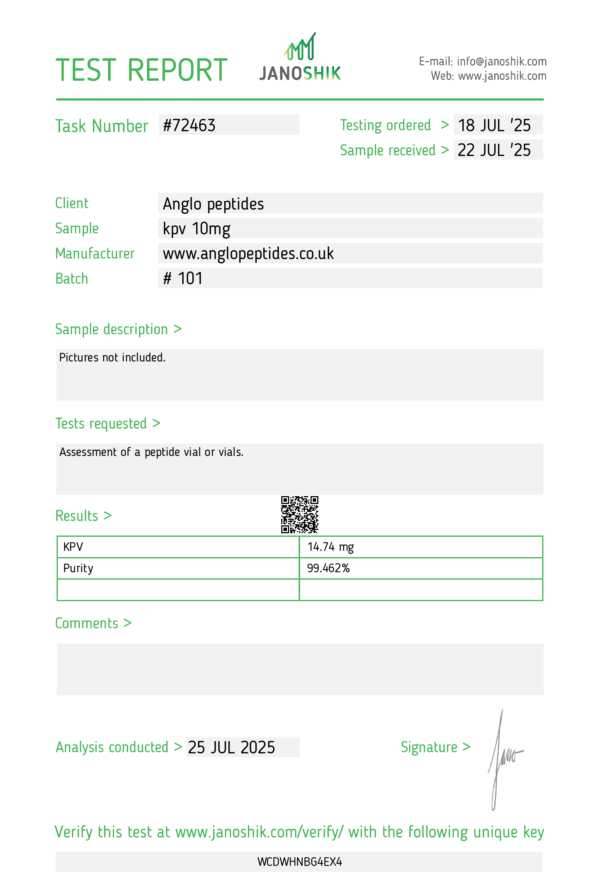
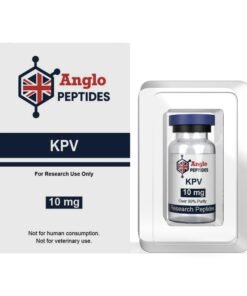
KPV Peptide UK – Research Peptide
Anglo Peptides provides
KPV peptide UK for legitimate laboratory and scientific
research. KPV is a short tripeptide consisting of the amino acids
lysine-proline-valine and corresponds to the C-terminal sequence of
alpha-melanocyte-stimulating hormone (α-MSH).
KPV has attracted scientific interest because of its relationship with
melanocortin biology and research into cellular inflammatory signalling.
Experimental studies have examined KPV in epithelial, intestinal and
other biological models.
This page provides scientific and product information only. It does not
provide dosing instructions, treatment recommendations or guidance for
personal administration.
What Is KPV Peptide?
KPV is a naturally derived tripeptide sequence associated with the
C-terminal region of α-MSH. Its name refers to the three amino acids that
make up the sequence: lysine (K), proline (P) and valine (V).
Scientific literature has investigated KPV separately from the full
α-MSH molecule, making it an interesting subject within peptide and
melanocortin research.
A study involving human keratinocytes investigated the signalling
responses of KPV alongside α-MSH and ACTH-related peptides, providing
useful evidence for understanding how these related peptides interact with
cellular signalling pathways.
Researchers can review the
peer-reviewed KPV and α-MSH keratinocyte study on PubMed
for additional scientific information.
KPV Research Background
KPV research peptide studies have investigated the
tripeptide in several biological models, particularly those involving
inflammatory signalling and epithelial biology.
Research has examined interactions involving signalling pathways such as
NF-κB and cellular responses to inflammatory stimuli. These investigations
have helped researchers understand potential mechanisms associated with
KPV at the cellular level.
Importantly, much of the available evidence remains experimental.
Findings obtained from cell-based or animal studies should therefore be
distinguished from established clinical evidence in humans.
KPV and Alpha-MSH
KPV is the C-terminal tripeptide of α-MSH, a melanocortin peptide involved
in a range of biological processes. Research into α-MSH has examined
melanocortin receptor signalling, immune responses and cellular
inflammation.
KPV is particularly interesting because research has investigated whether
some biological properties associated with α-MSH can be retained by its
shorter C-terminal sequence.
A scientific review examining α-MSH-related tripeptides discusses the
biochemical properties and experimental research surrounding KPV and
related compounds.
Read the α-MSH and KPV research review on PubMed
.
KPV and Cellular Inflammation Research
Experimental research has examined KPV in models of cellular and
intestinal inflammation. One study investigated KPV in intestinal
epithelial and immune cells and reported effects involving inflammatory
signalling pathways.
Researchers have also investigated KPV in experimental models of colitis.
In mouse models, published work reported reduced inflammatory changes
following experimental KPV treatment.
These findings provide a basis for continued research into the biological
mechanisms of KPV, but animal-model findings should not be presented as
proof of an established human treatment effect.
The relevant
KPV inflammatory bowel research is available through PubMed
.
KPV Tripeptide Research
As a short peptide sequence, KPV provides researchers with an opportunity
to investigate the biological properties of small melanocortin-derived
peptides.
Research has examined how KPV interacts with cellular pathways and whether
its effects depend on classical melanocortin receptors or alternative
mechanisms.
A study using human bronchial epithelial cells investigated KPV in relation
to inflammatory signalling and reported effects involving NF-κB-related
pathways. Such studies provide useful mechanistic context for ongoing KPV
research.
Researchers can review the
KPV airway epithelial research published on PubMed
.
KPV Peptide UK Product Information
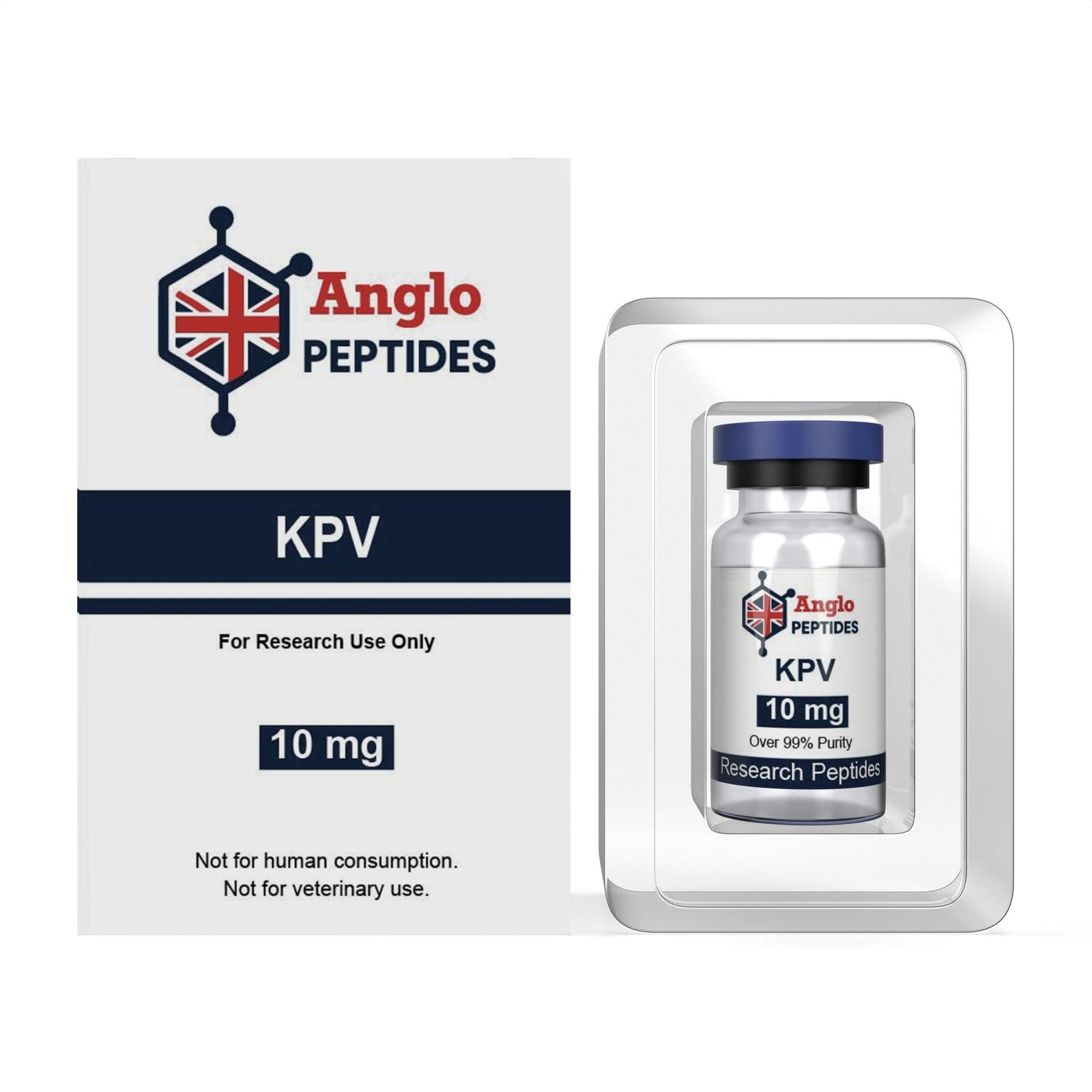
Researchers considering a KPV research peptide should
review the specific product information provided on this page before
ordering.
Relevant product considerations may include available quantity, product
presentation, storage information where provided and applicable fulfilment
arrangements.
Researchers should select material according to their own validated
laboratory procedures and intended research requirements.
For delivery information, review the
Anglo Peptides Shipping Policy
.
KPV and Related Peptide Research
Researchers investigating peptide biology, cellular signalling and
inflammation-related pathways may also find other materials within the
Anglo Peptides catalogue relevant for comparative research.
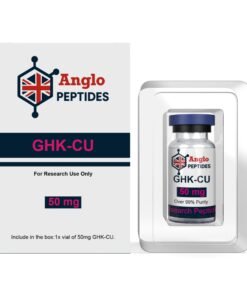
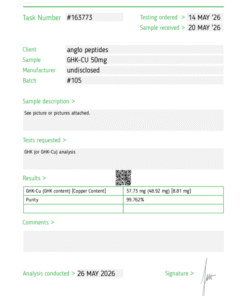
GHK-Cu
– a copper-associated peptide research material.
SNAP-8 peptide
– a synthetic peptide associated with cosmetic and biochemical research.
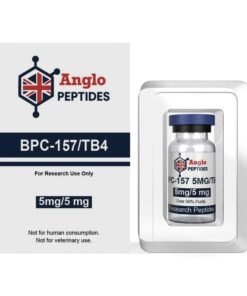
BPC-157
– another peptide research material investigated in preclinical studies.
TB-500
– a separate research material associated with thymosin beta-4 fragment
research.
Explore the complete
research peptide collection
to discover additional products.
Research Considerations for KPV
KPV remains an experimental research peptide. Although published studies
have reported interesting biological findings, the available evidence
varies according to the experimental model and research methodology.
Results from cell cultures and animal studies should not automatically be
translated into human therapeutic claims. Researchers should consult the
original scientific literature when evaluating KPV research.
Researchers should also distinguish KPV from the complete α-MSH peptide and
from other related melanocortin-derived tripeptides.
Ordering KPV Peptide UK
Before ordering, researchers should review the product information
provided on this page and ensure that the intended purchase is appropriate
for legitimate laboratory or scientific research.
Customers and researchers are responsible for ensuring that their purchase,
possession, handling and intended research activities comply with all
applicable laws, regulations and institutional requirements.
To explore additional products, visit the
Anglo Peptides Shop
.
Research-Use Notice
KPV products supplied through Anglo Peptides are presented strictly for
legitimate research purposes.
This product is not intended for human consumption, self-administration,
diagnosis, treatment or prevention of disease.
Anglo Peptides does not provide dosing instructions, administration
protocols, treatment recommendations or medical advice. Researchers are
responsible for ensuring that their activities comply with applicable
legal, regulatory and institutional requirements.
Frequently Asked Questions
What is KPV peptide?
KPV is a short tripeptide consisting of lysine, proline and valine. It
corresponds to the C-terminal sequence of alpha-melanocyte-stimulating
hormone (α-MSH).
What is KPV researched for?
Research has investigated KPV in areas including cellular signalling,
epithelial biology and inflammatory pathways. Preclinical studies have
also examined the tripeptide in experimental models of intestinal
inflammation.
Is KPV the same as alpha-MSH?
No. KPV is the C-terminal tripeptide sequence of α-MSH, whereas α-MSH is a
substantially longer melanocortin peptide. They should be treated as
distinct research materials.
Is KPV an approved treatment?
KPV is an experimental research peptide and should not be represented as
an approved treatment or established therapy for inflammatory or other
medical conditions.
Is this product intended for human use?
No. Products supplied through Anglo Peptides are presented strictly for
legitimate research purposes and are not intended for human consumption
or self-administration.
Where can I find other research peptides?
Browse the
research peptide collection
or visit the
Anglo Peptides Shop
.
Explore KPV Peptide UK
Review the available KPV product information and explore related research
materials within the Anglo Peptides catalogue.

Reviews
There are no reviews yet.