MOTS C Dosage – Research Information
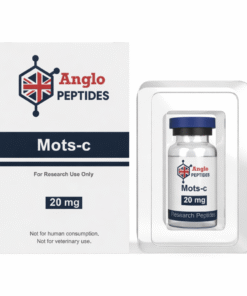
Anglo Peptides provides
research-use MOTS-c products for legitimate laboratory and scientific
research. Researchers searching for MOTS C dosage
information should understand that published experimental amounts vary
substantially according to the species, study design, administration
method and scientific objective.
MOTS-c is an endogenous mitochondrial-derived peptide that has attracted
scientific interest in metabolic regulation, mitochondrial biology and
cellular stress research. Because the compound remains an investigational
research subject, experimental amounts reported in laboratory or animal
studies should not be interpreted as established human dosing
recommendations.
Understanding MOTS C Dosage Research
There is no single universal MOTS C dosage that applies
across research. Experimental protocols can differ according to the
biological model, route of administration, frequency of exposure, study
duration and desired experimental endpoint.
A dose used in an animal experiment cannot automatically be converted into
an appropriate amount for humans. Researchers must account for differences
in physiology, metabolism, pharmacokinetics and experimental design when
interpreting published findings.
For this reason, researchers should evaluate the original methodology of
each study rather than relying on generic dosage tables published by
commercial websites.
MOTS-c Research Background
MOTS-c is a peptide encoded within mitochondrial DNA and has been
investigated as part of the growing field of mitochondrial-derived peptide
research.
Early research identified MOTS-c as a mitochondrial-derived peptide
associated with metabolic regulation. Subsequent experimental studies have
examined its relationship with glucose metabolism, cellular stress
responses and other biological processes.
Researchers can review the original scientific literature through
the PubMed record for the original MOTS-c research
.
Why MOTS-c Research Doses Vary
Published research can use different experimental concentrations or
administered quantities depending on the research model. Factors that can
influence an experimental protocol include:
- Species and biological model
- Study duration
- Experimental objective
- Route and method of administration
- Peptide preparation and formulation
- Frequency of experimental exposure
- Measured biological endpoint
These variables make it inappropriate to treat one published experimental
amount as a universal dosage standard.
MOTS-c Dosage in Preclinical Studies
Much of the available MOTS-c literature comes from preclinical research.
Animal and laboratory studies can provide valuable information about
biological activity and experimental mechanisms, but their findings do
not establish an approved human dosing regimen.
Researchers reviewing a published study should therefore examine the
complete experimental methodology, including the model used, route of
administration, frequency, duration and measured outcomes.
A study’s reported amount should be regarded as part of that study’s
experimental design rather than a recommendation for use outside the
research setting.
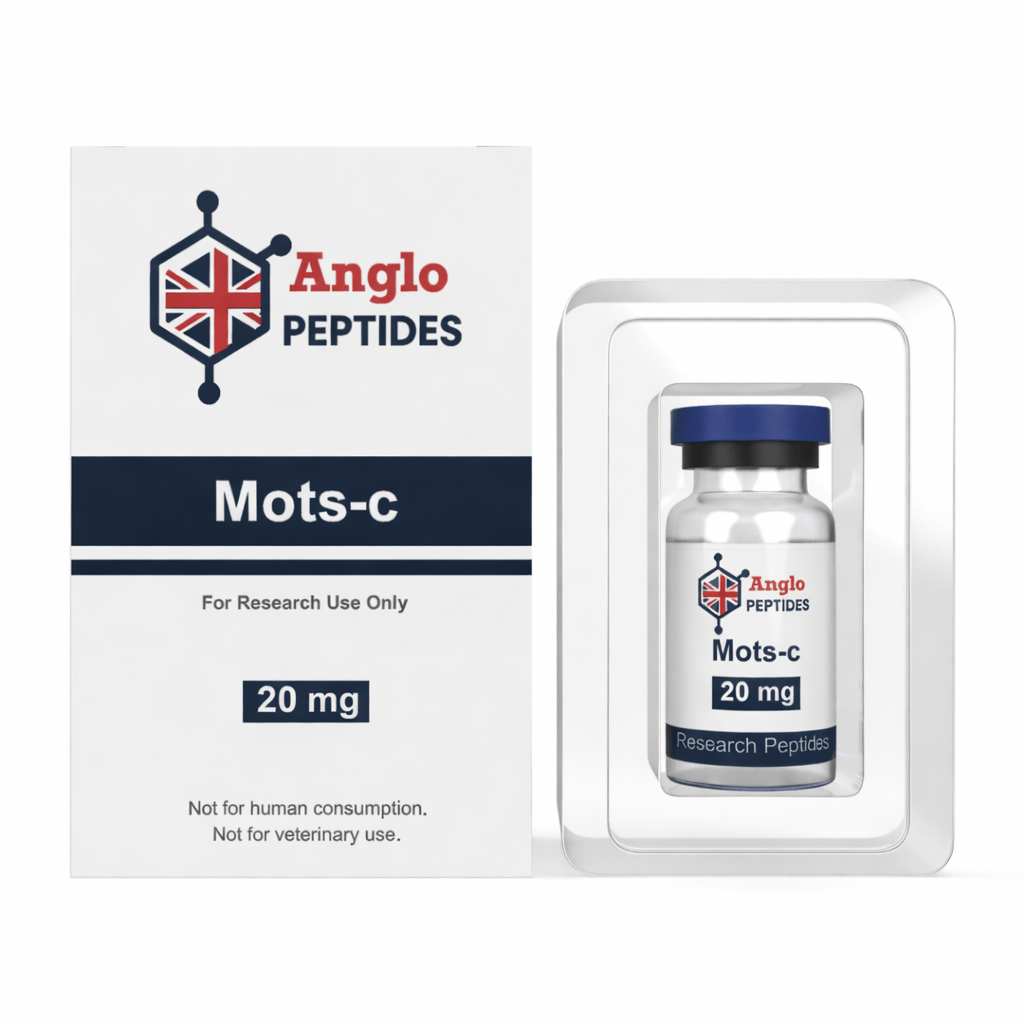
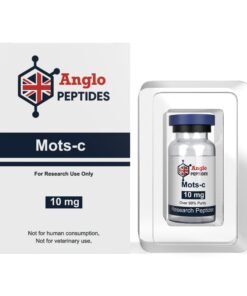
MOTS-c Peptide UK Product Information
Researchers looking for a MOTS-c peptide UK research
product should review the specific product information provided on the
relevant Anglo Peptides product page.
Available product information may include product presentation, quantity,
storage information where provided and applicable fulfilment details.
Researchers should select the material and quantity appropriate to their
own validated laboratory protocol rather than relying on generic dosing
recommendations.
For delivery information, review the
Anglo Peptides Shipping Policy
.
MOTS-c Research Peptide and Related Products
Researchers exploring mitochondrial, metabolic and peptide research may
also be interested in other materials available through Anglo Peptides.
MOTS-c peptide UK
– a related MOTS-c product page within the catalogue.
SLU-PP 332
– a synthetic research compound investigated in relation to
mitochondrial and metabolic pathways.
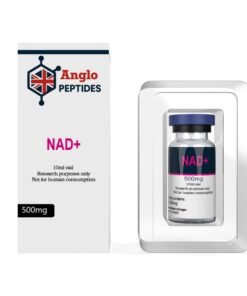
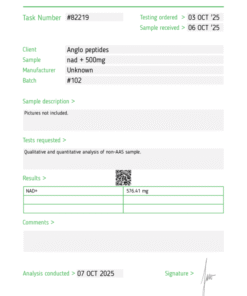
NAD research product
– relevant to research involving cellular metabolism and redox biology.
AOD-9604 peptide
– another research material associated with metabolic research.
Explore the complete
research peptide collection
for additional products.
How to Interpret Published MOTS-c Dosage Data
When reviewing MOTS-c research, it is useful to distinguish between three
different types of information: the amount administered in an experiment,
the concentration used in a laboratory assay and a clinically established
therapeutic dose.
These are not interchangeable. An experimental concentration used in a
cell-based assay cannot be treated as equivalent to an administered dose
in an animal model, and neither establishes a human therapeutic dosage.
Researchers should therefore consult the original publication and its
methods section whenever quantitative experimental information is required.
Current Research Status of MOTS-c
MOTS-c remains an active area of preclinical research rather than an
established therapeutic peptide with a universally accepted human dosing
schedule.
Research continues to examine how mitochondrial-derived peptides interact
with cellular metabolic pathways and how these mechanisms may be relevant
to future biomedical research.
The scientific evidence should be assessed according to the quality and
design of individual studies, particularly when moving from laboratory
models toward human research.
Ordering MOTS C Research Material
Before ordering, researchers should review the available product
information and ensure that the intended purchase is appropriate for
legitimate laboratory or scientific research.
Customers and researchers are responsible for ensuring that their purchase,
possession, handling and intended research activities comply with all
applicable laws, regulations and institutional requirements.
To explore the wider catalogue, visit the
Anglo Peptides Shop
.
Research-Use Notice
MOTS-c products supplied through Anglo Peptides are presented strictly for
legitimate research purposes.
This product is not intended for human consumption, self-administration,
diagnosis, treatment or prevention of disease.
Anglo Peptides does not provide human dosing instructions, injection
protocols, treatment recommendations or medical advice. Researchers are
responsible for developing and validating experimental protocols through
appropriate scientific and institutional processes.
Frequently Asked Questions
What is MOTS-c?
MOTS-c is a mitochondrial-derived peptide that has been investigated in
areas including cellular metabolism, mitochondrial biology and metabolic
signalling.
Is there a standard MOTS C dosage?
There is no universally established human dosage for MOTS-c. Experimental
amounts vary between studies according to the research model,
administration method, study duration and scientific objective.
Can animal research doses be converted directly to humans?
No. Experimental amounts used in animal studies cannot simply be treated
as human dosing recommendations. Differences in physiology, metabolism and
pharmacokinetics must be considered when interpreting preclinical research.
What is MOTS-c research focused on?
Research has investigated MOTS-c in relation to mitochondrial function,
metabolic regulation, cellular stress responses and related biological
pathways.
Where can I find MOTS-c research material?
Explore the
MOTS-c peptide UK
product page or browse the wider
research peptide collection
.
Explore MOTS C Dosage Research Information
Review scientific information about MOTS-c experimental dosing and explore
related research products available through the Anglo Peptides catalogue.

Reviews
There are no reviews yet.